A gallery wall is more than just a collection of frames—it’s a powerful design statement that tells a story about your personality, memories, and style. Whether you live in a compact apartment or a spacious house, a thoughtfully designed gallery wall can instantly elevate your interiors. From modern minimal arrangements to bold, eclectic displays, gallery walls work beautifully in living rooms, bedrooms, staircases, hallways, offices, and even dining areas.
In this in-depth guide, you’ll explore 14 unique gallery wall ideas, each explained in detail so you can confidently recreate them in your own space. These ideas suit a wide range of home styles, budgets, and wall sizes.
1. Classic Symmetrical Gallery Wall
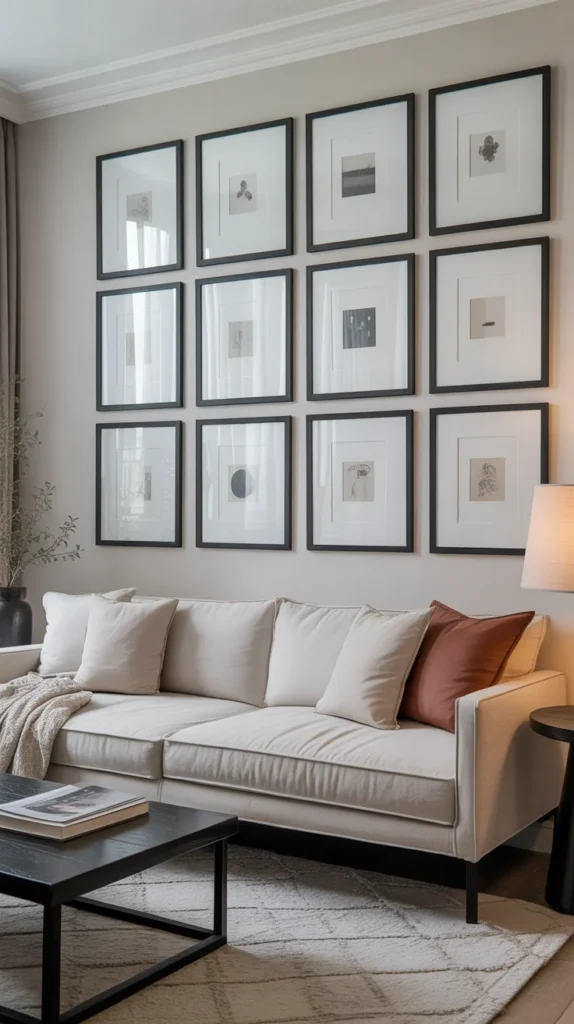
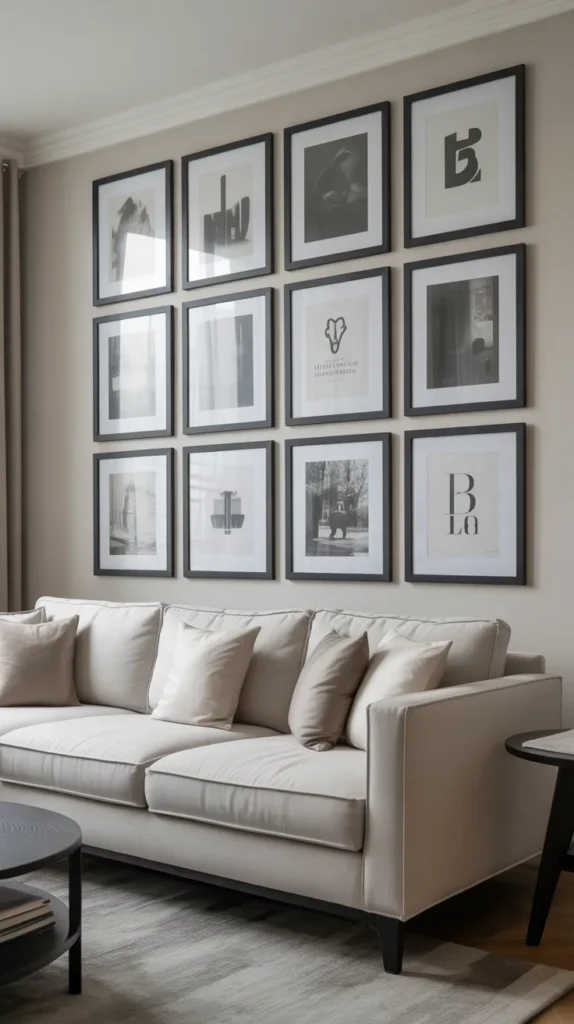
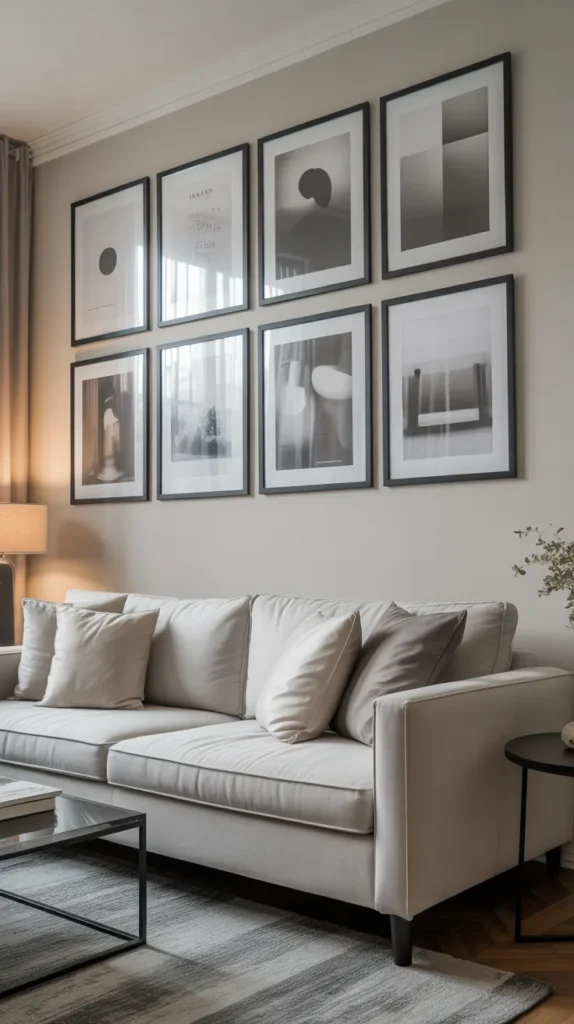
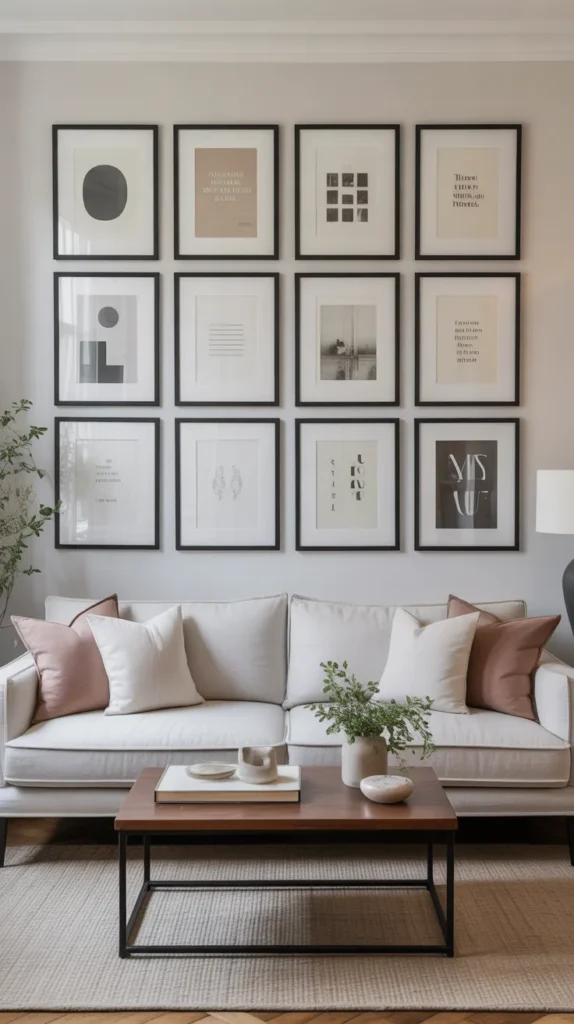
A classic symmetrical gallery wall is perfect for homeowners who love balance, order, and timeless design. This style involves arranging frames in a neat grid or perfectly aligned rows and columns. Each frame is usually the same size, color, and style, creating a cohesive and polished appearance. Symmetry works exceptionally well in formal living rooms, above sofas, console tables, or beds, where visual harmony is important.
This type of gallery wall allows the artwork itself to shine without distraction. Black-and-white photographs, line art, typography prints, or muted illustrations work especially well. Because the layout is structured, it feels calming and uncluttered, making it ideal for minimalist or modern interiors. Even if you add personal photos, the uniform arrangement ensures the wall looks intentional rather than chaotic.
Lighting plays a key role here. Soft wall washers or picture lights can enhance the clean geometry and draw attention to each frame. If your wall is large, extending the grid evenly across the space creates a gallery-like experience similar to a museum display.
2. Eclectic Mix-and-Match Gallery Wall
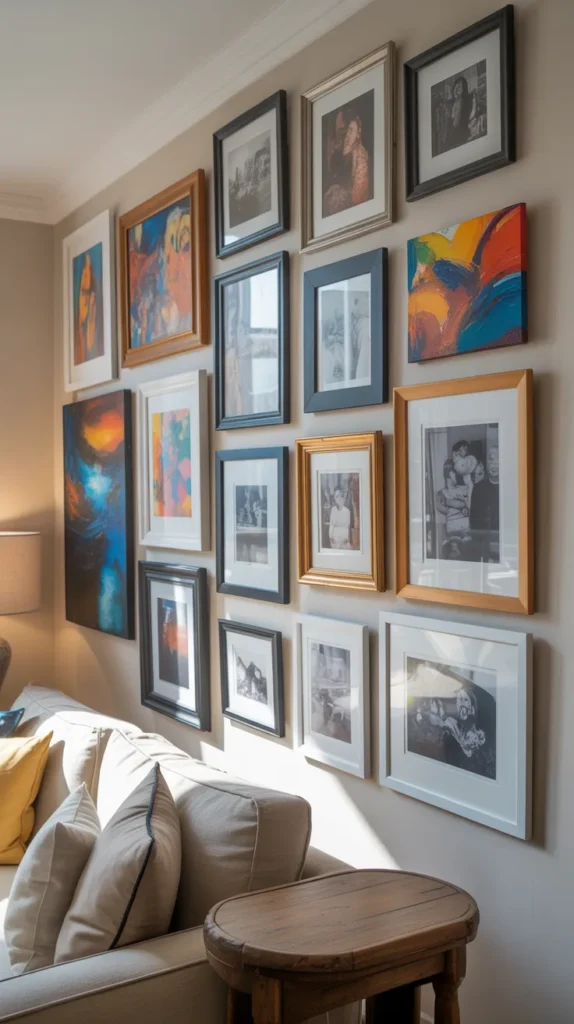
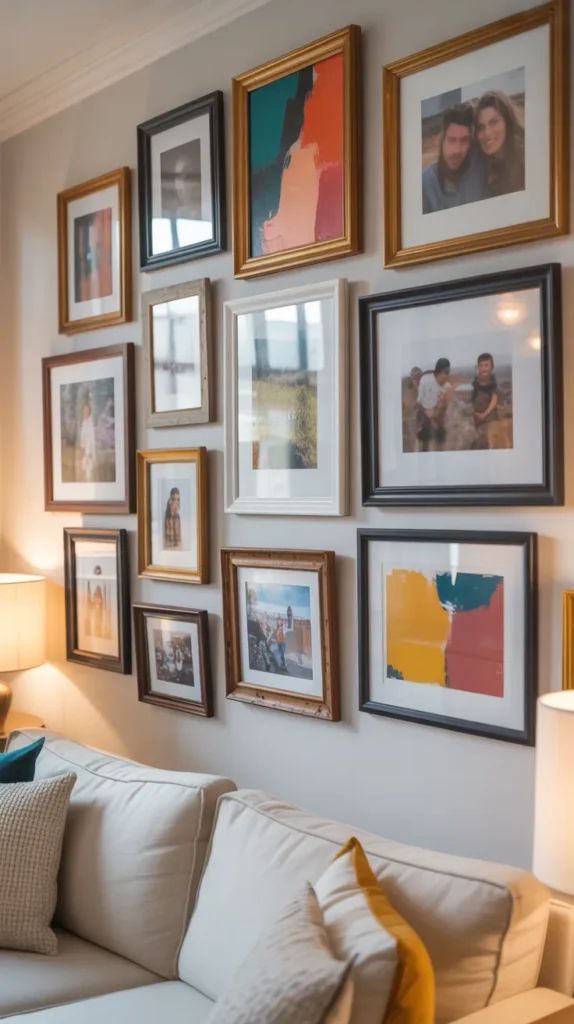
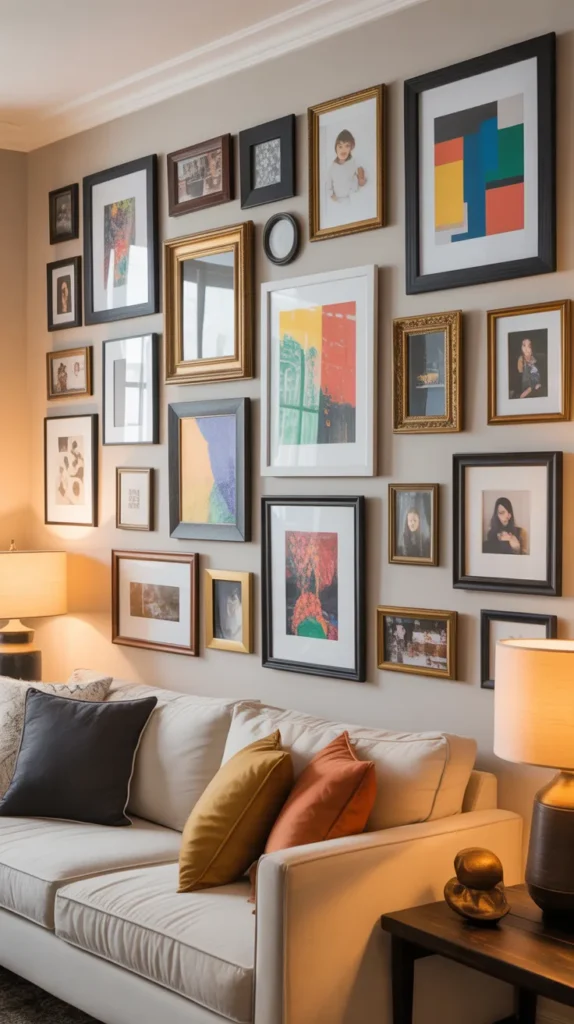
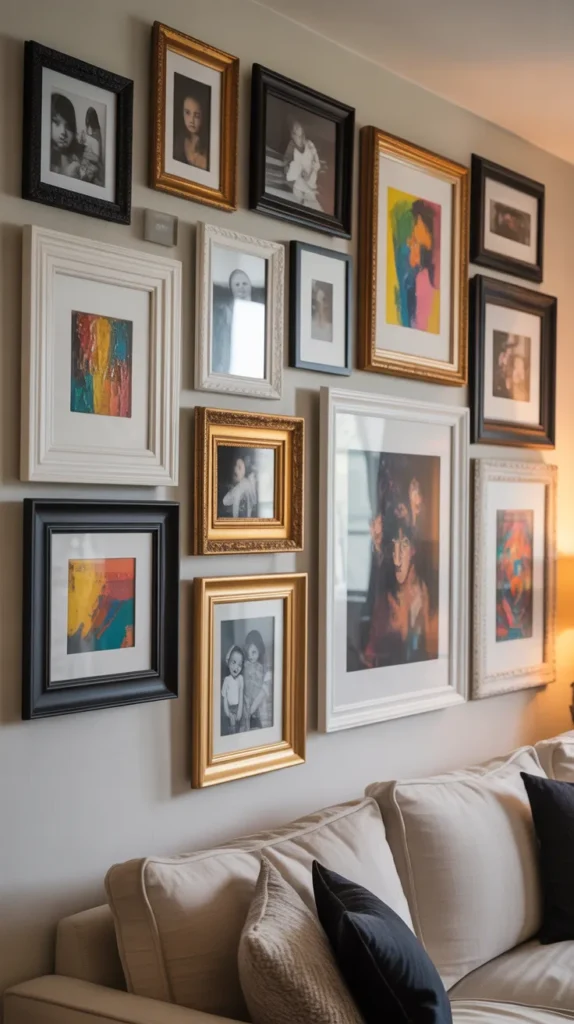
An eclectic gallery wall celebrates creativity, personality, and freedom. Instead of following strict rules, this style blends different frame sizes, colors, materials, and art types into one expressive composition. You might combine family photos, abstract art, illustrations, quotes, postcards, and even small objects like mirrors or wall sculptures.
The beauty of this approach lies in its imperfection. The layout often starts from a central piece and expands outward organically. While it may look random at first glance, successful eclectic walls still maintain a sense of visual balance through color coordination or thematic consistency. For example, you might use different frames but keep all artwork within a warm color palette.
This idea works wonderfully in creative spaces such as home offices, hallways, or casual living rooms. It reflects evolving tastes, as you can easily add or swap pieces over time. An eclectic gallery wall grows with you, making it a deeply personal design choice.
3. Black and White Photo Gallery Wall
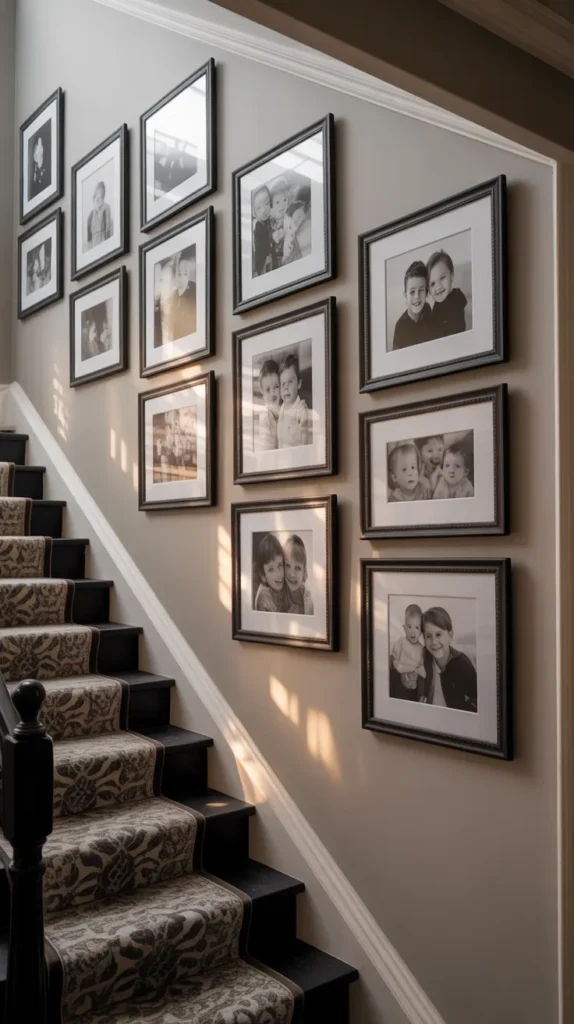
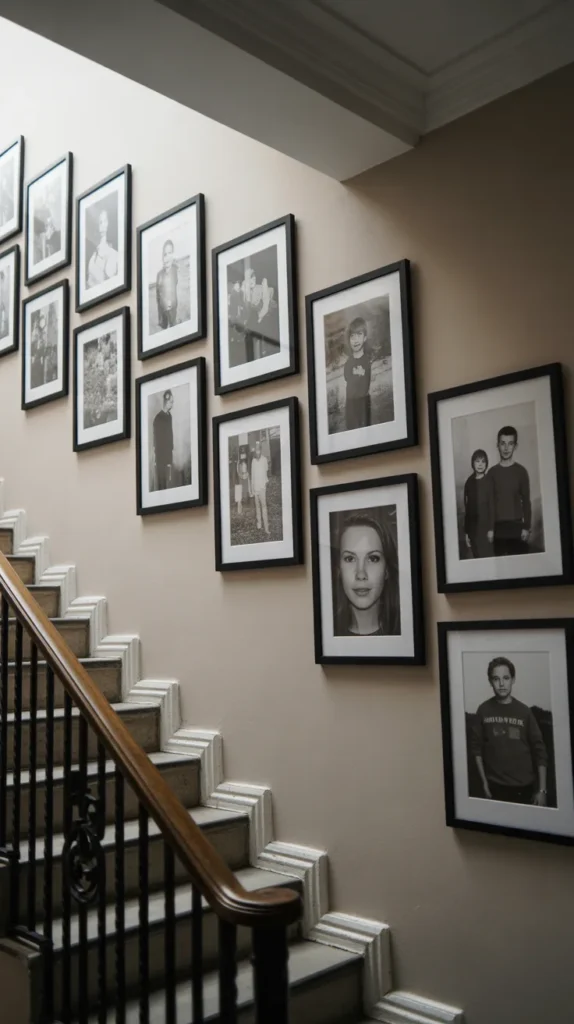
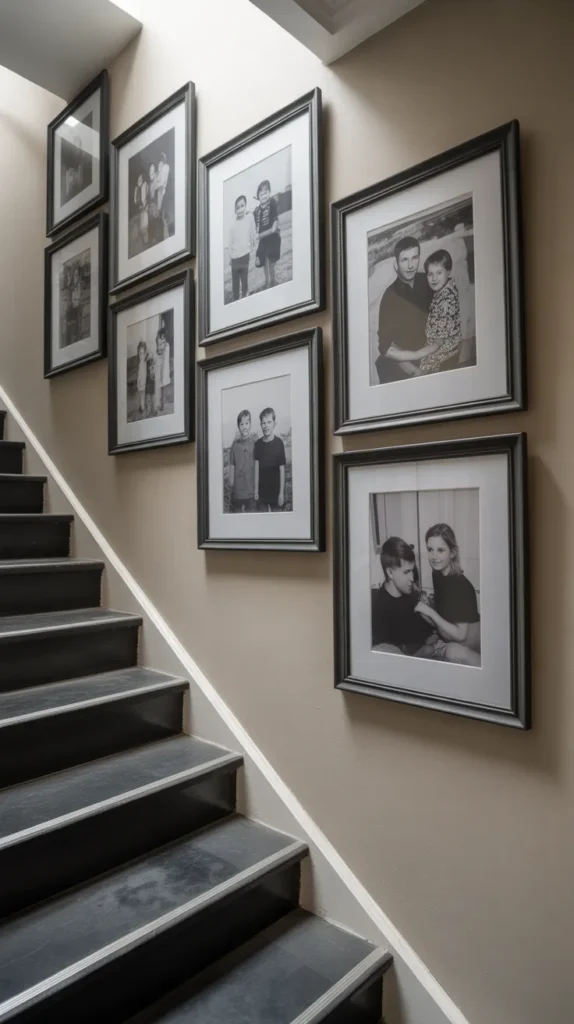
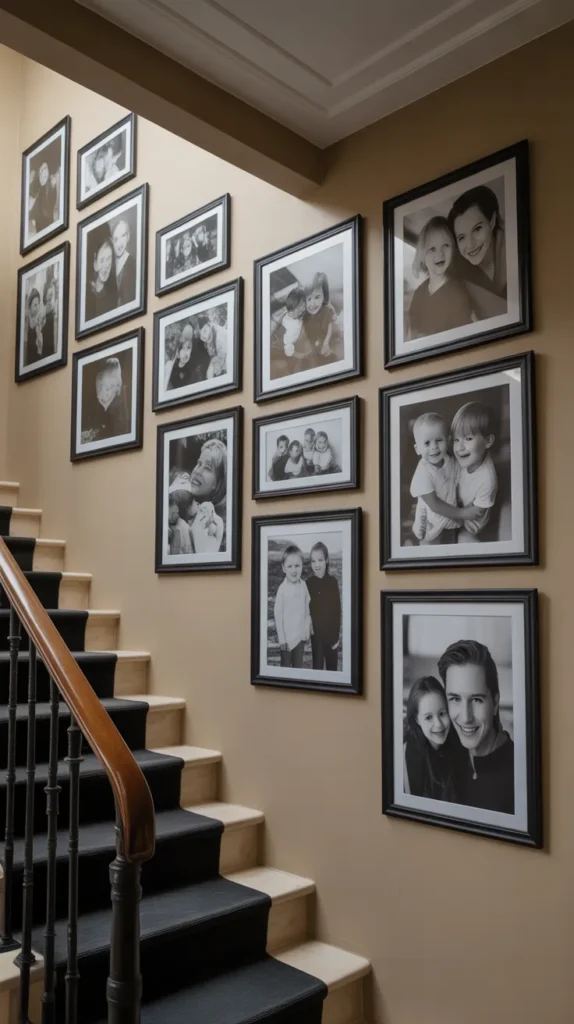
A black and white photo gallery wall is a timeless option that brings sophistication and emotional depth to any space. By removing color, the focus shifts to expressions, composition, and storytelling. This style works beautifully for family portraits, travel photography, architectural shots, or candid moments.
Uniform black or white frames enhance the cohesive look, while white matting adds breathing room between the photo and frame. You can arrange the photos symmetrically for a clean finish or asymmetrically for a slightly modern edge. This gallery wall style pairs well with almost any interior design, from contemporary to traditional.
Because black and white imagery is visually calm, you can use many frames without overwhelming the room. This makes it ideal for large walls, staircases, or long corridors where you want continuity and flow.
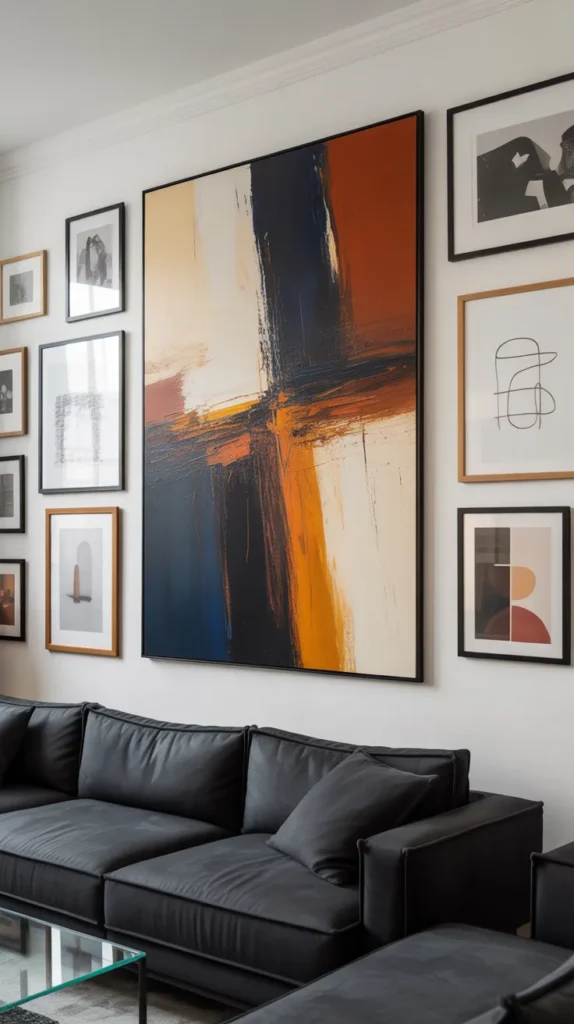
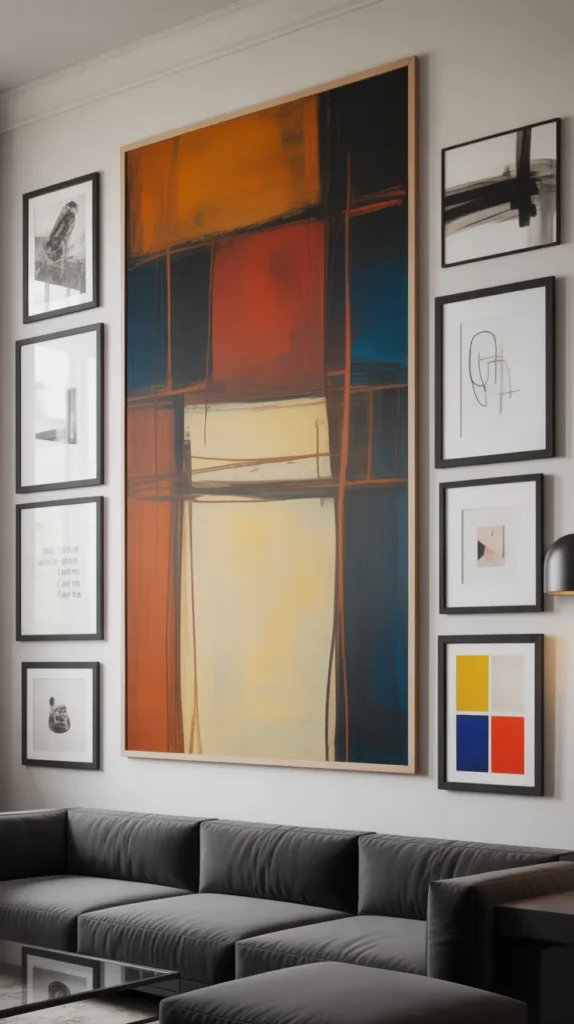
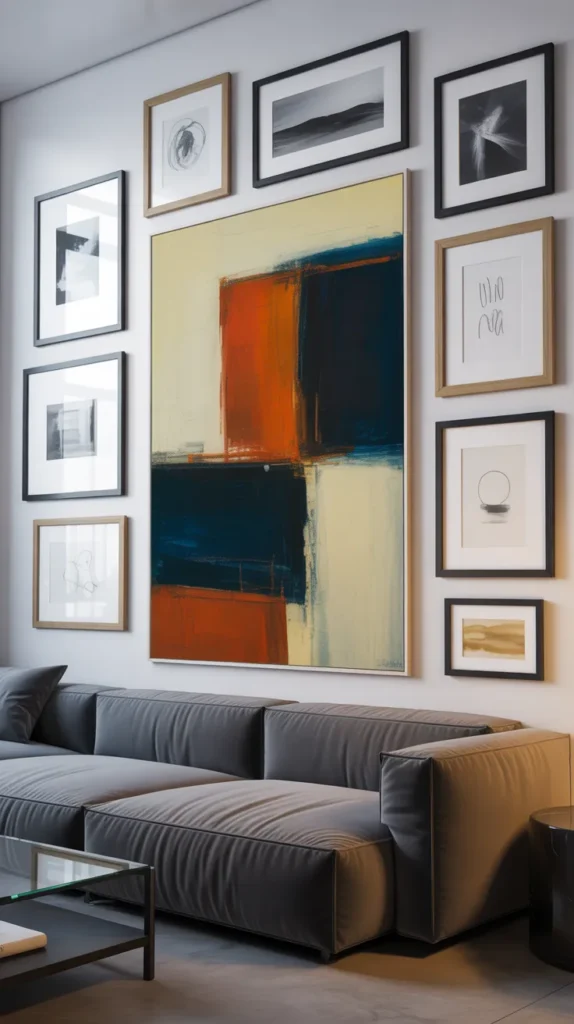
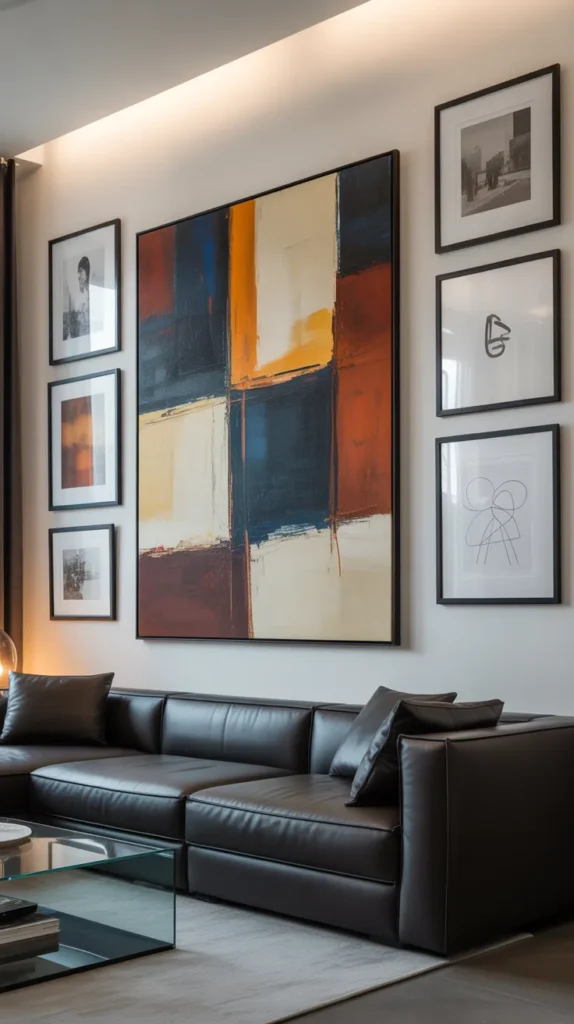
4. Large Statement Art with Supporting Frames
This gallery wall idea centers around one large statement piece, supported by smaller frames arranged around it. The main artwork immediately grabs attention, while the surrounding pieces complement it without competing for focus. This approach is ideal if you own a bold painting, oversized photograph, or dramatic illustration.
The key is hierarchy. The central piece should be significantly larger or more visually dominant than the rest. Supporting frames can echo colors, themes, or textures from the main artwork, creating a unified composition. This style works well in living rooms, dining areas, or entryways where you want a strong first impression.
It’s also a great solution for beginners, as the layout is easier to plan compared to fully filled walls. You can expand the gallery gradually by adding more supporting pieces over time.
5. Floor-to-Ceiling Gallery Wall
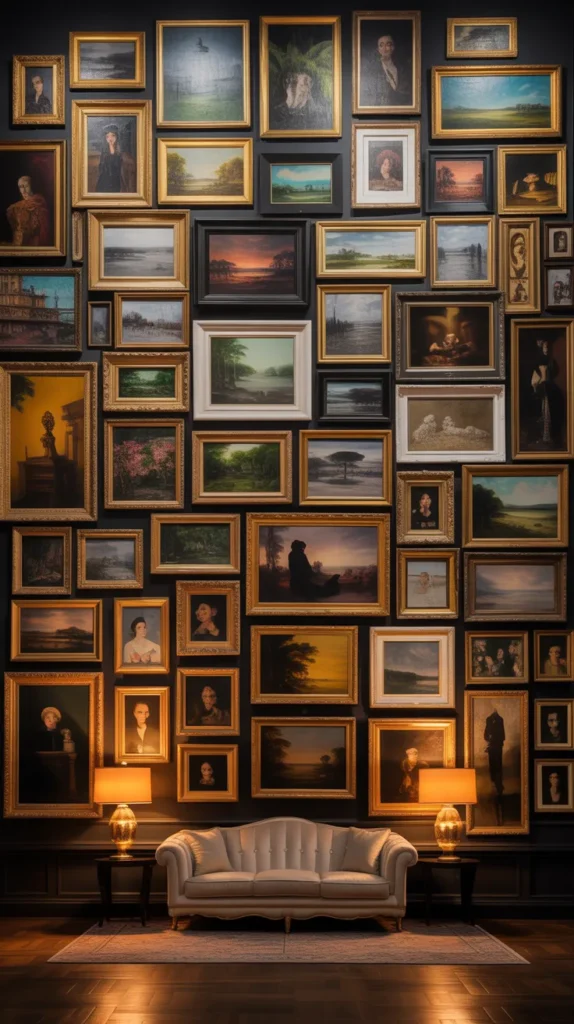
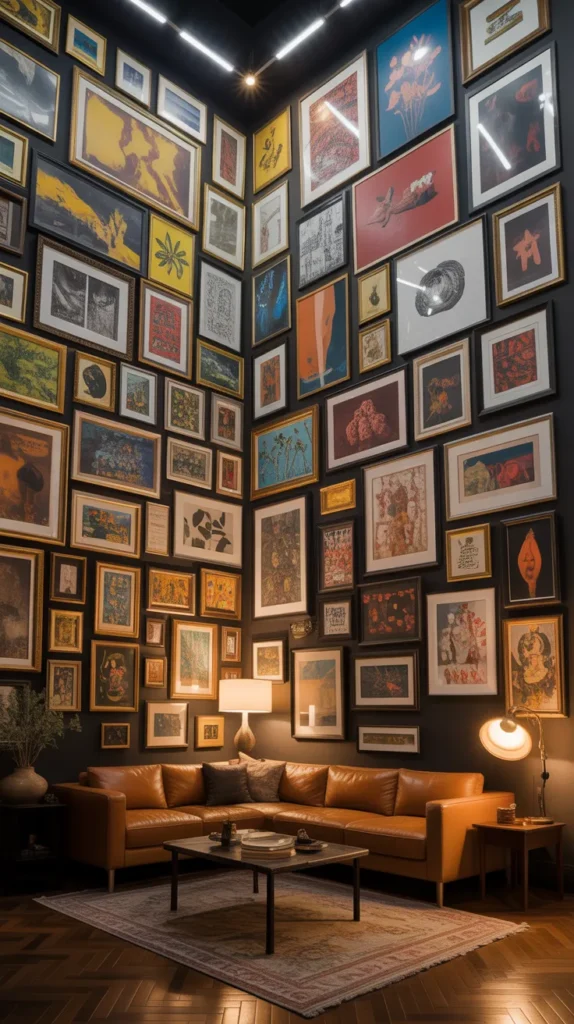
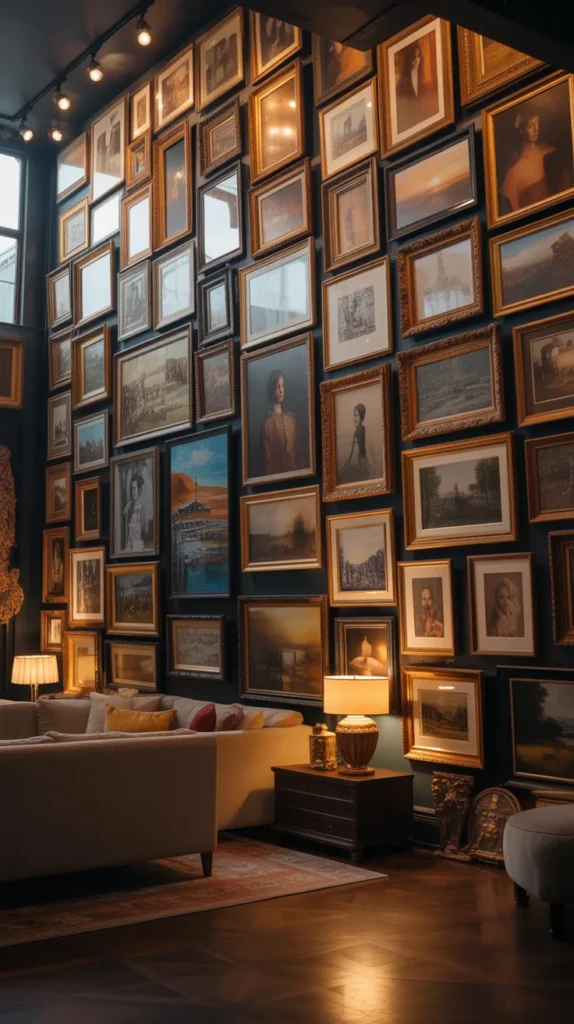
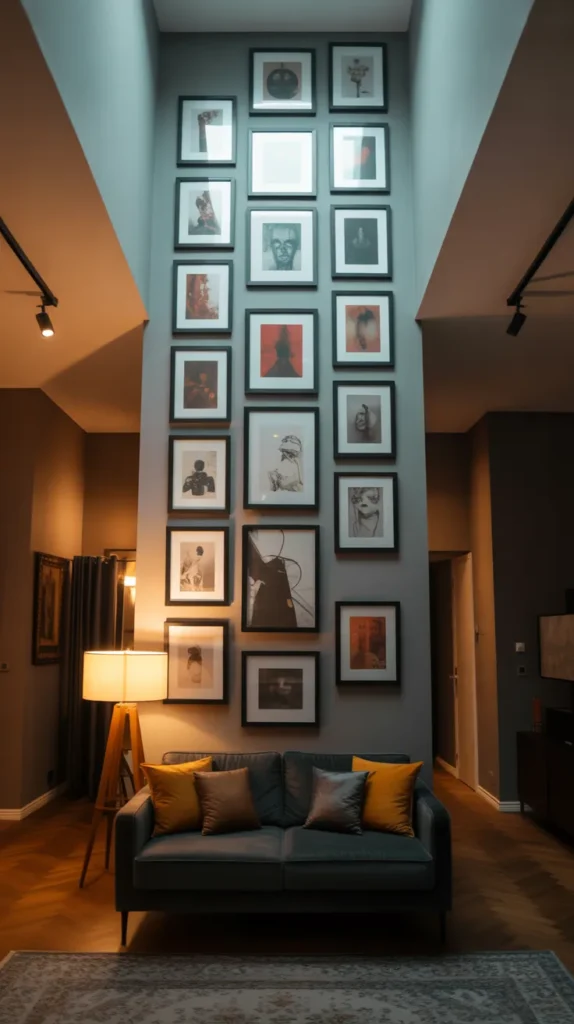
A floor-to-ceiling gallery wall creates a dramatic, immersive visual experience. By covering the entire vertical space, this design transforms the wall into a bold design feature. It works exceptionally well in rooms with high ceilings or along staircases where vertical movement enhances the effect.
This style often combines multiple frame sizes and orientations to fill the space naturally. While it may seem overwhelming, maintaining a consistent color palette or frame style keeps the look cohesive. Floor-to-ceiling gallery walls are perfect for showcasing extensive art collections or photo archives.
When done right, this idea turns your wall into a storytelling canvas, drawing the eye upward and making the room feel taller and more dynamic.
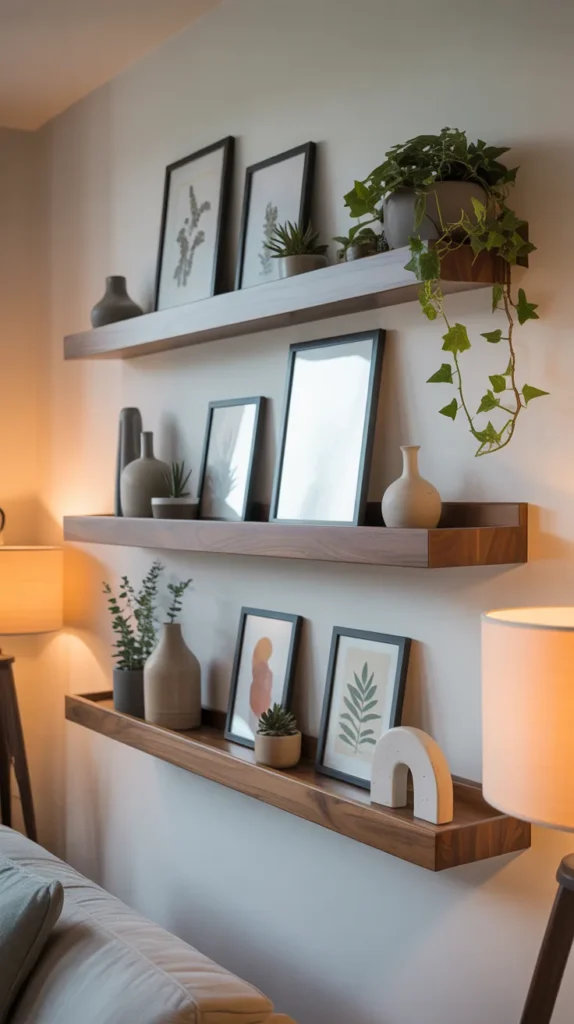
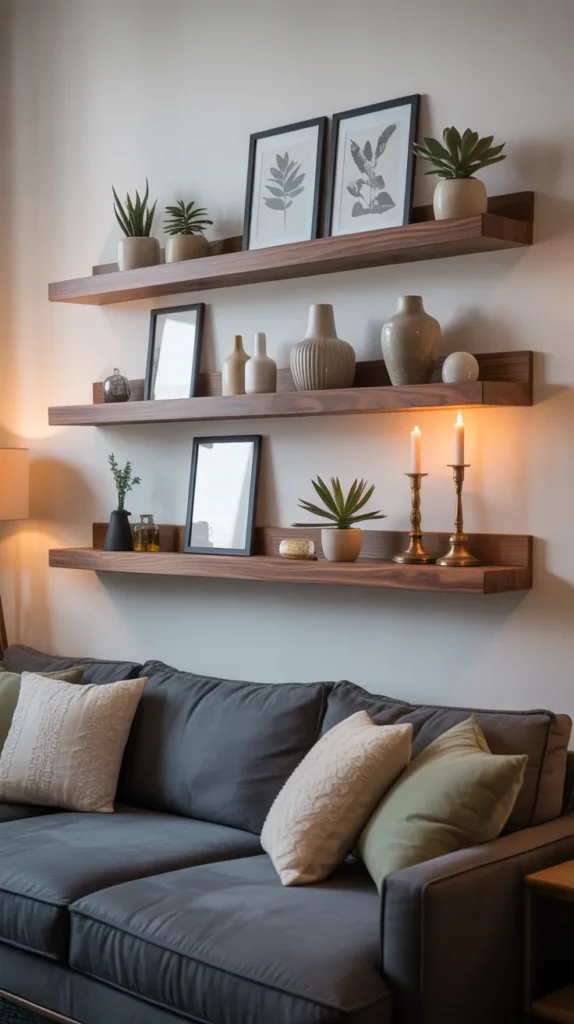
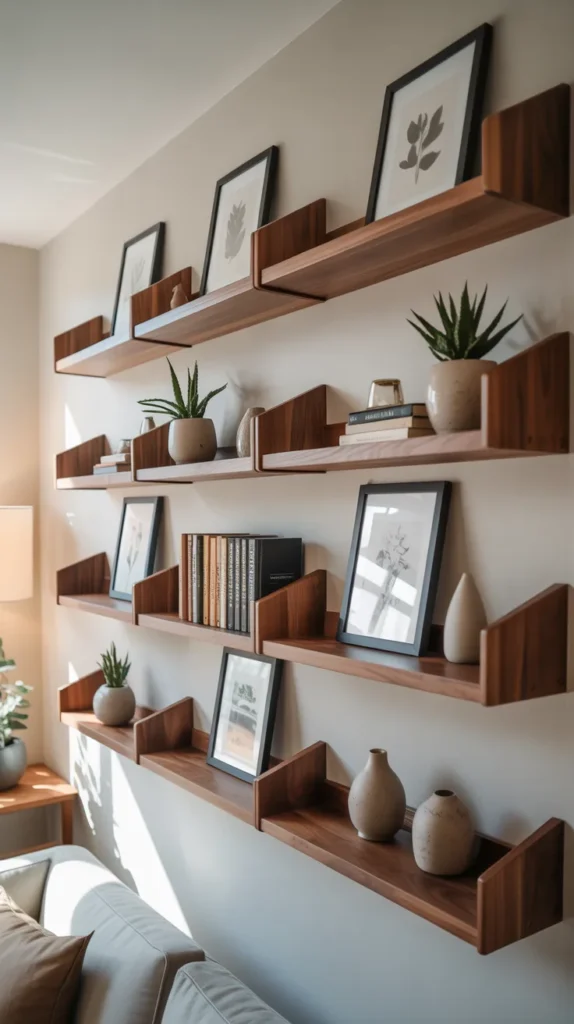
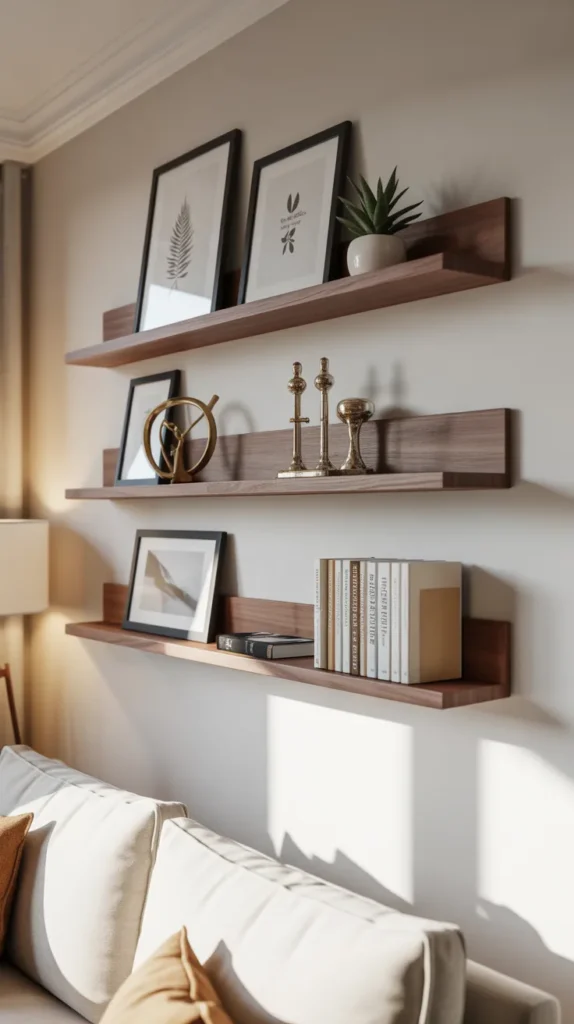
6. Gallery Wall with Floating Shelves
Combining frames with floating shelves offers flexibility and depth. Shelves allow you to layer frames, lean artwork instead of hanging everything, and easily swap pieces without damaging walls. This style is perfect for renters or those who like frequently changing decor.
You can mix framed art with small plants, books, sculptures, or decorative objects. The result is a relaxed, lived-in look that feels curated rather than fixed. Floating shelf gallery walls work especially well in living rooms, bedrooms, and home offices.
The key is spacing—leave enough room between shelves to avoid visual clutter while still creating a cohesive display.
7. Themed Gallery Wall
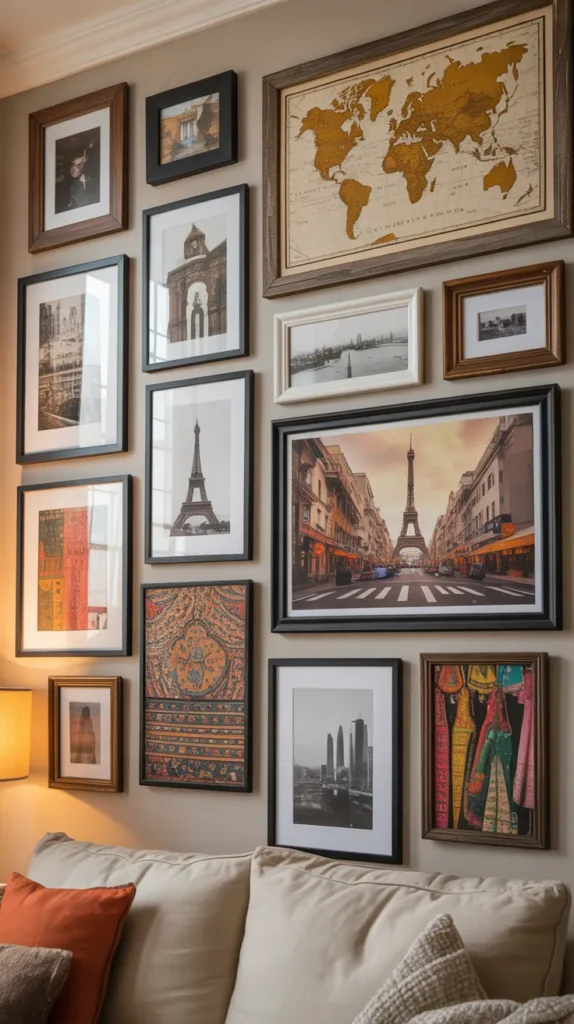
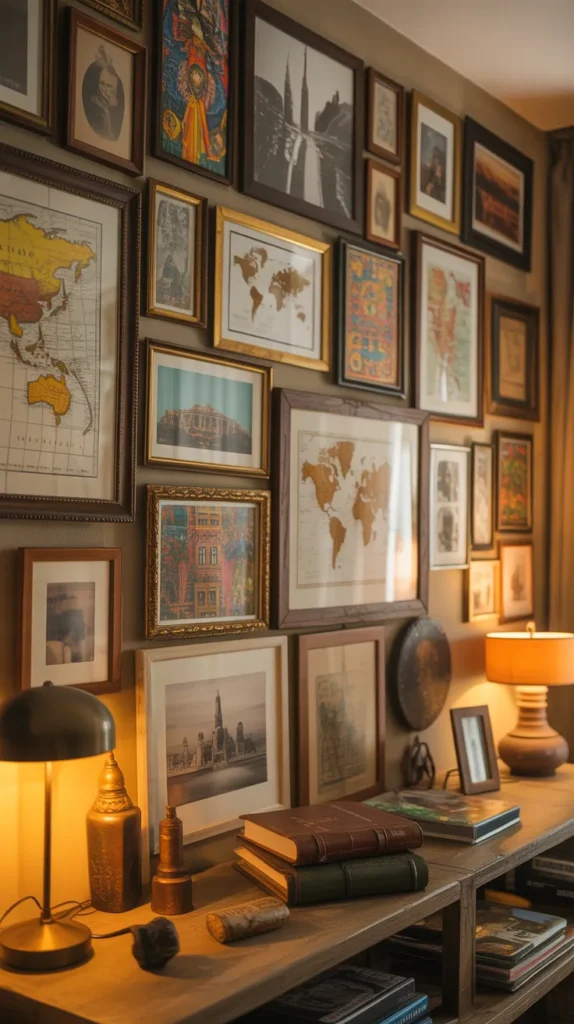
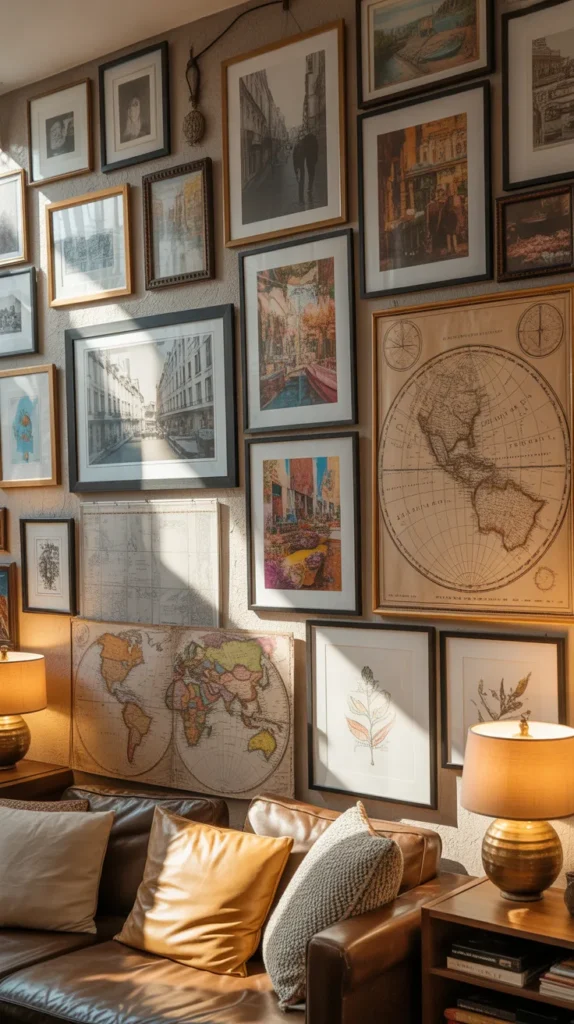
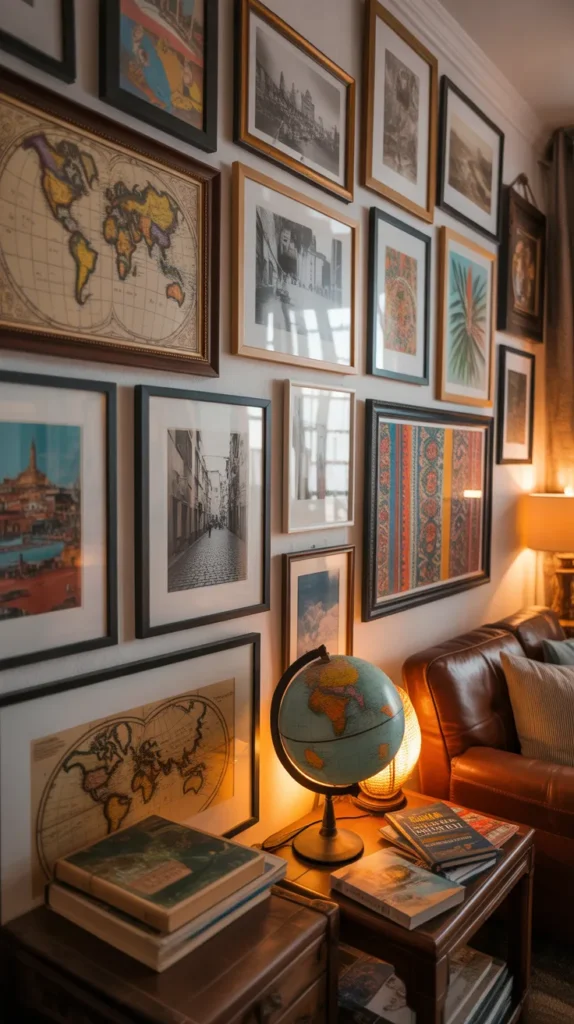
A themed gallery wall revolves around a single concept such as travel, nature, typography, architecture, or personal milestones. This approach brings clarity and purpose to your display, making it visually engaging and meaningful.
For example, a travel-themed wall could include maps, city photography, postcards, and cultural artwork. A nature theme might focus on botanical prints, landscapes, or wildlife photography. The theme helps guide frame selection, color choices, and layout decisions.
Themed gallery walls are excellent conversation starters and work well in living rooms, hallways, or study areas.
8. Minimalist Gallery Wall
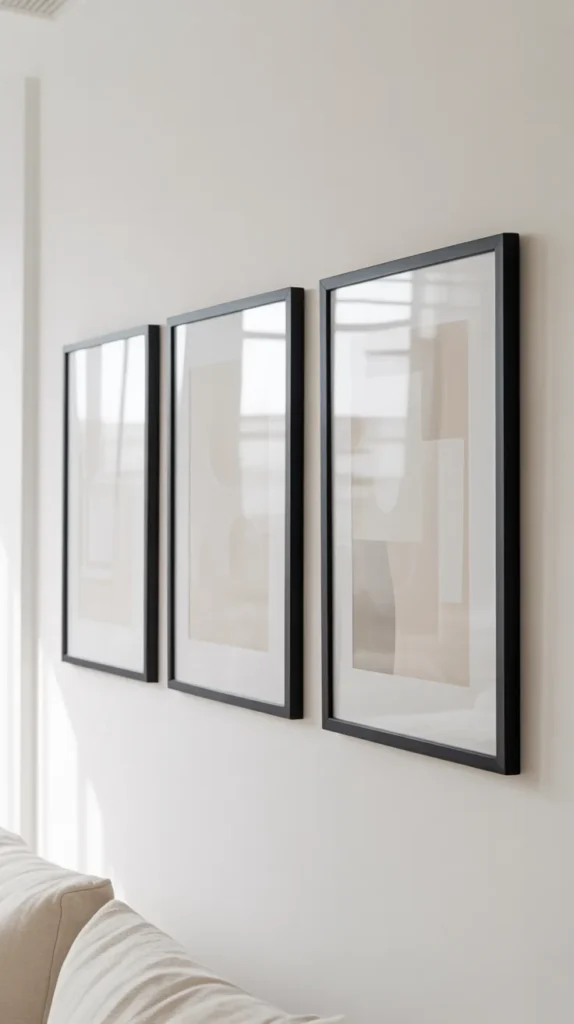
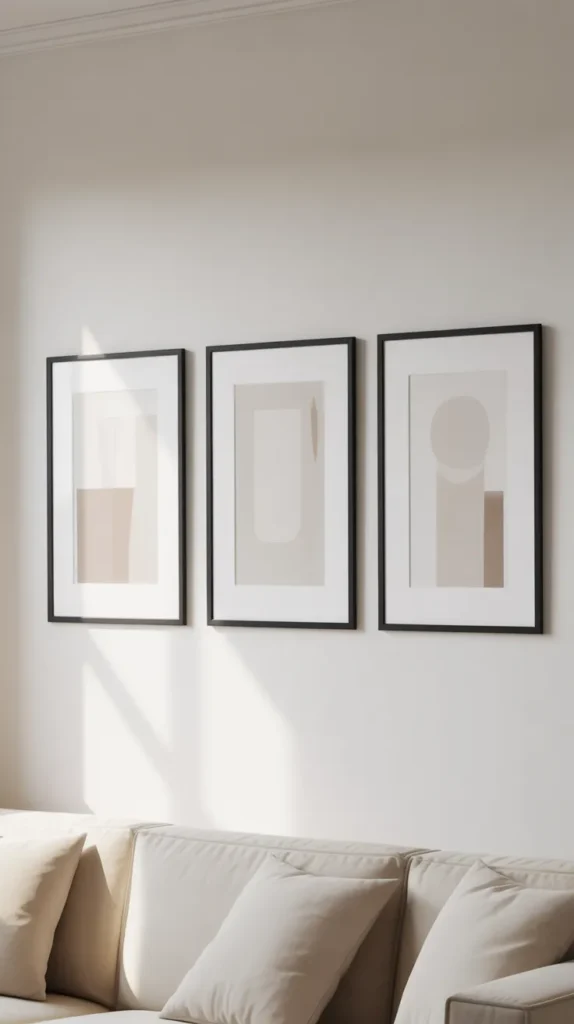
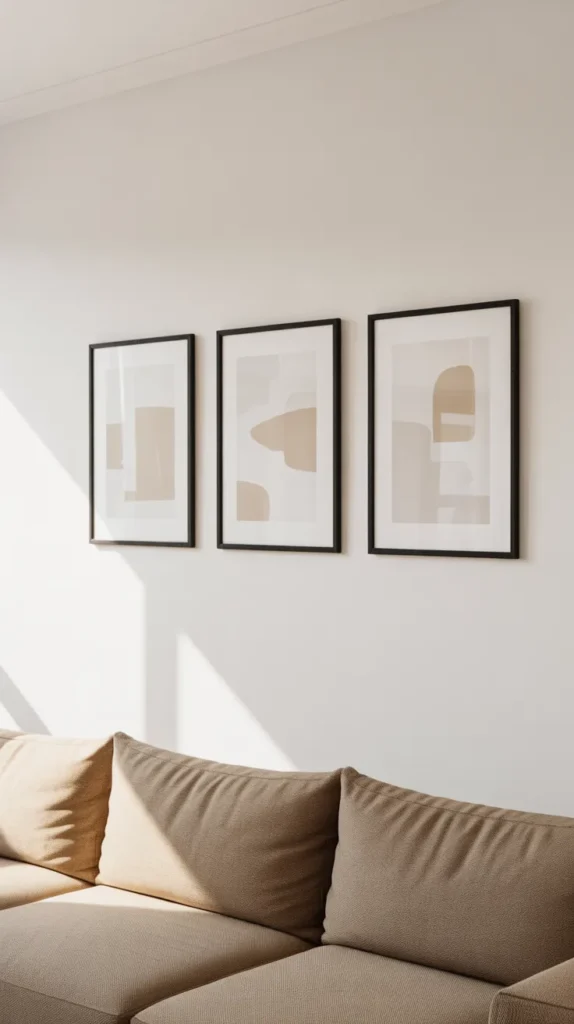
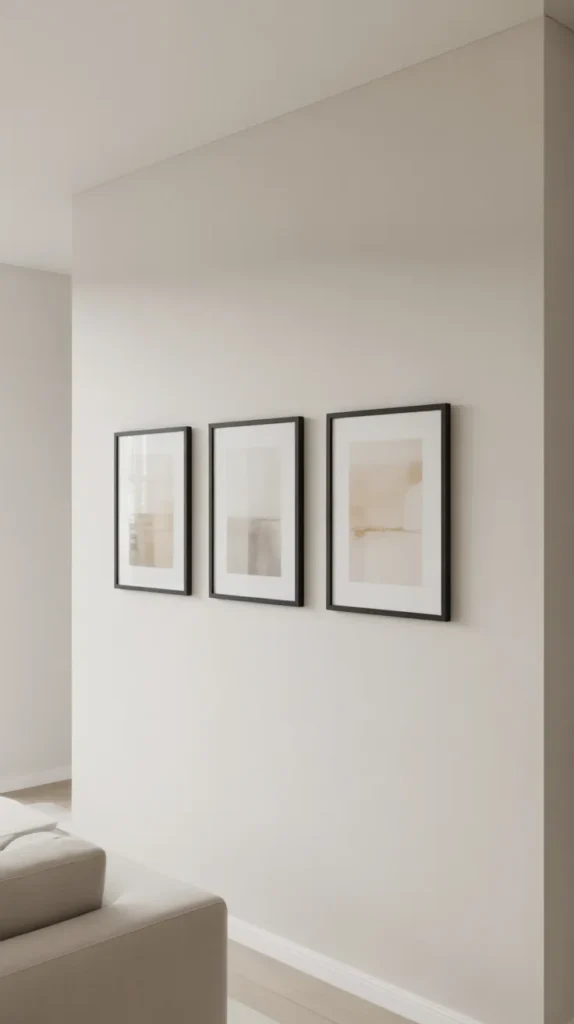
A minimalist gallery wall focuses on simplicity, negative space, and intentional design. Fewer frames are used, each carefully selected and positioned to create maximum impact. Neutral colors, clean lines, and subtle artwork define this style.
This approach works best in modern homes where clutter-free design is a priority. The wall doesn’t overwhelm the space; instead, it quietly enhances it. Minimalist gallery walls are ideal for small rooms where too much decor could feel heavy.
9. Vintage-Inspired Gallery Wall
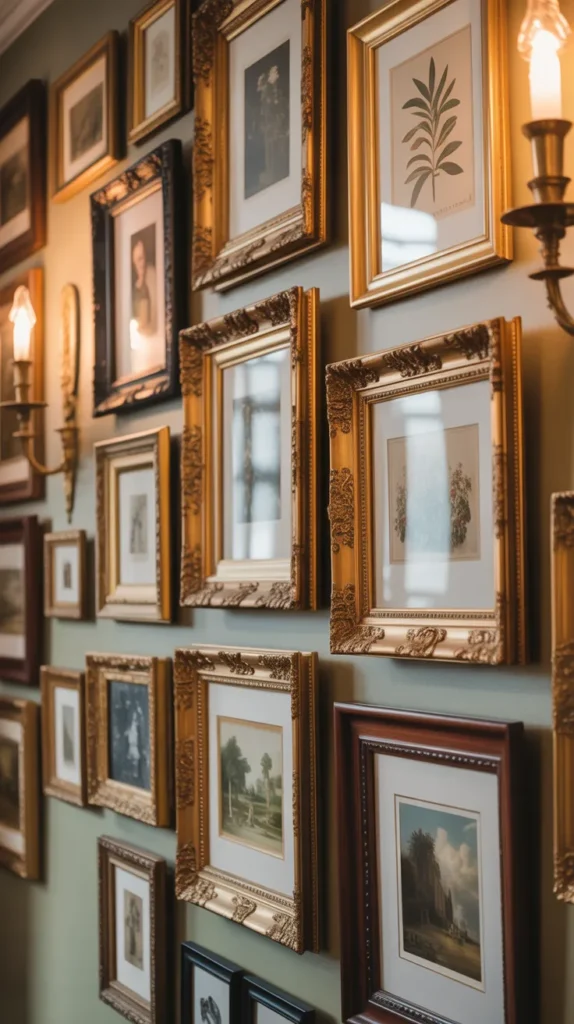
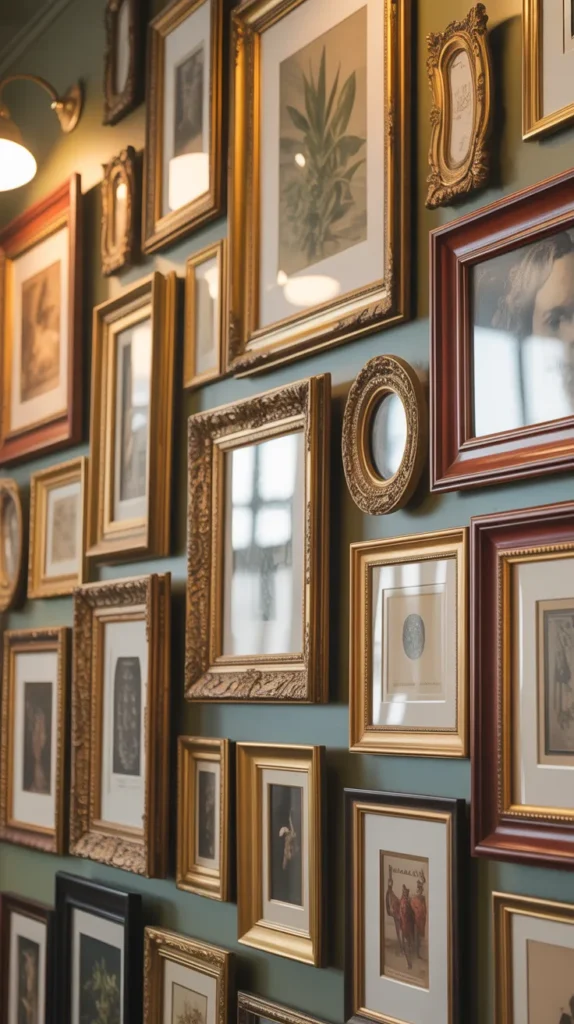
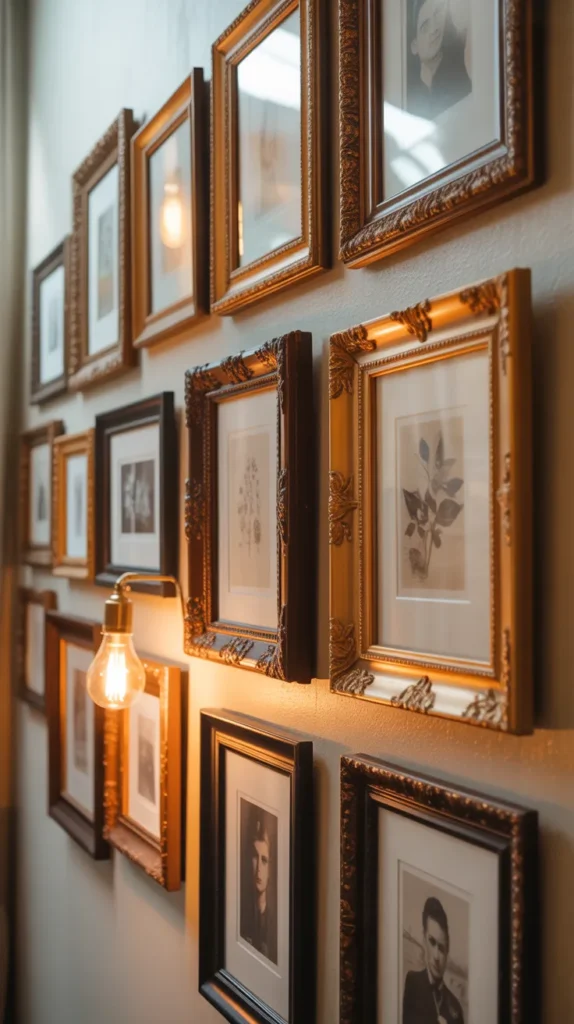
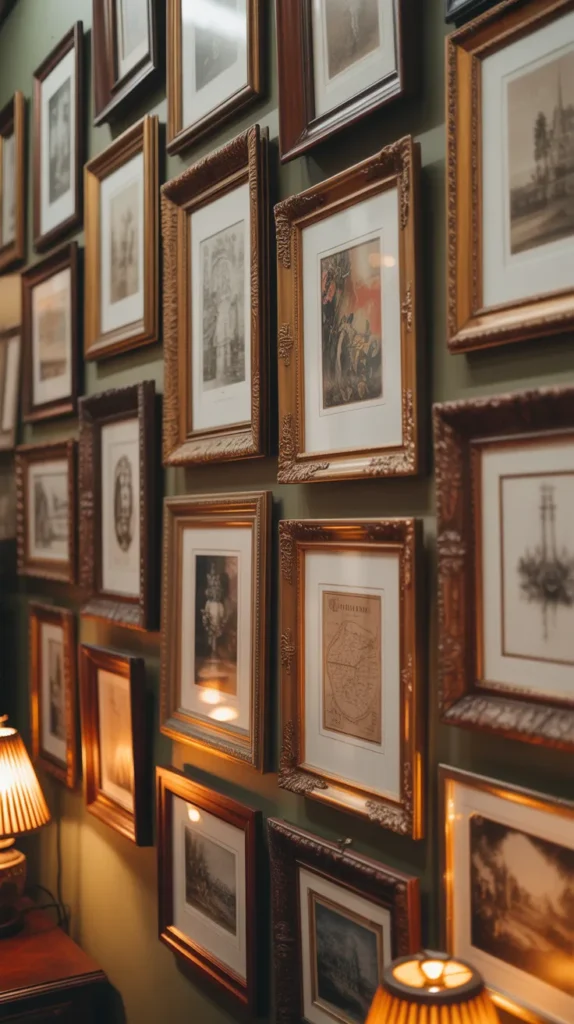
A vintage gallery wall brings warmth, nostalgia, and character into your home. This style often features ornate frames, aged finishes, old photographs, classical art prints, and muted color tones. Mixing frame styles enhances the antique charm.
It works beautifully in traditional homes, reading corners, or dining rooms where you want a cozy, timeless feel. Adding warm lighting enhances the vintage mood and highlights the texture of frames.
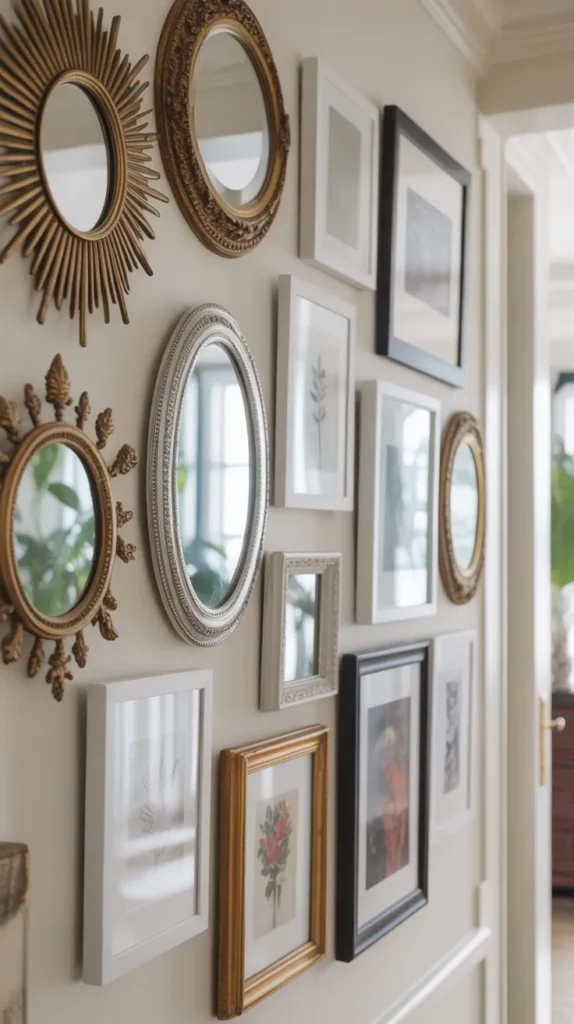
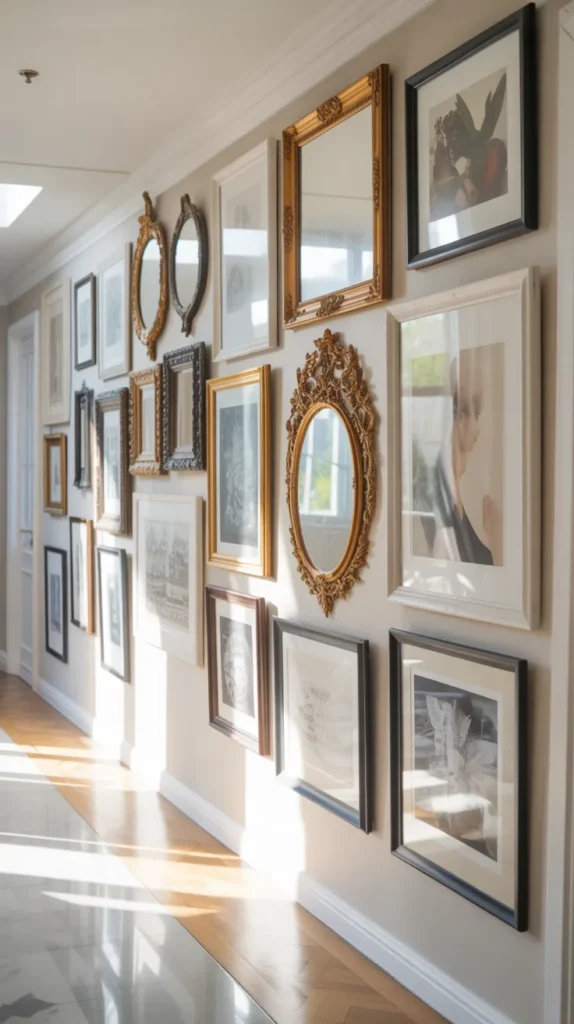
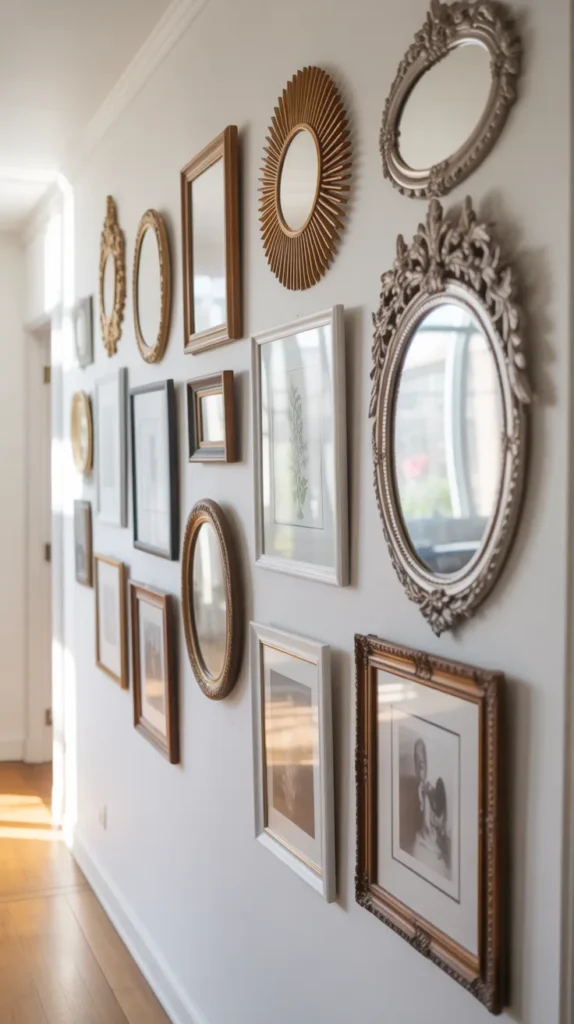
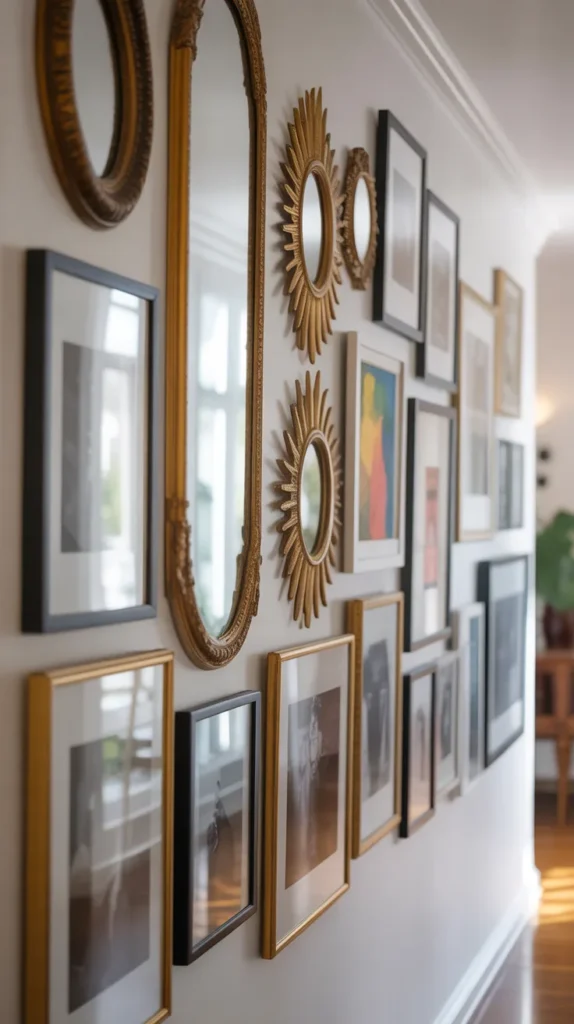
10. Gallery Wall with Mirrors
Incorporating mirrors into a gallery wall adds light, depth, and functionality. Mirrors reflect natural light, making small or dark rooms feel brighter and larger. You can mix mirrors with framed art or create a mirror-focused display.
This idea is perfect for entryways, hallways, or compact living rooms. Decorative mirror shapes and frames add visual interest while maintaining practicality.
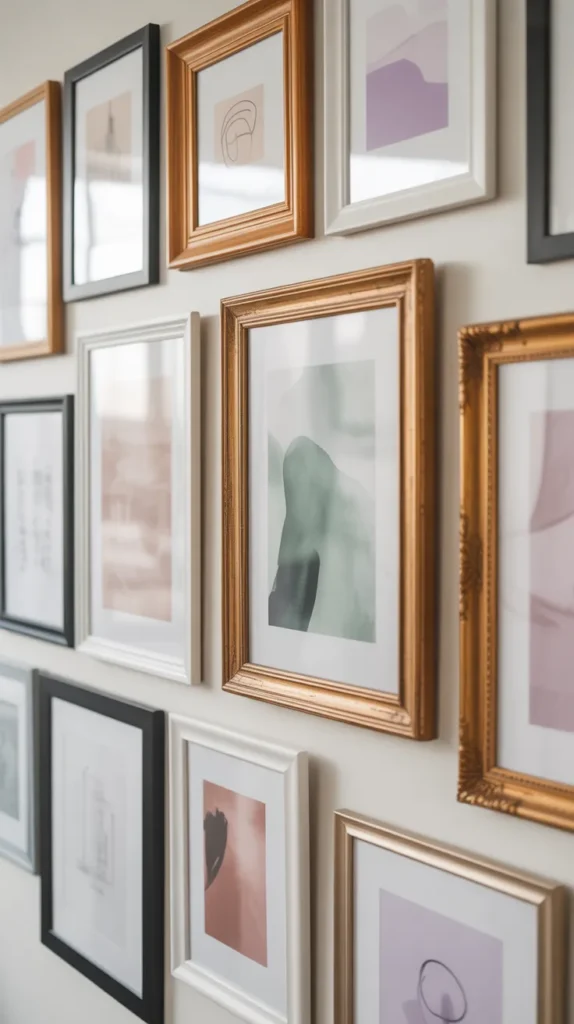
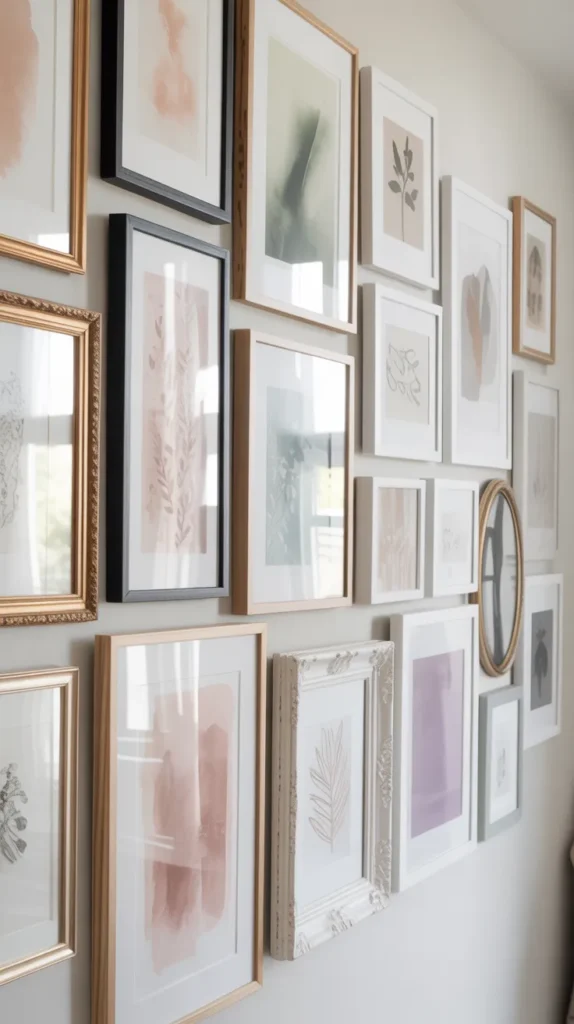
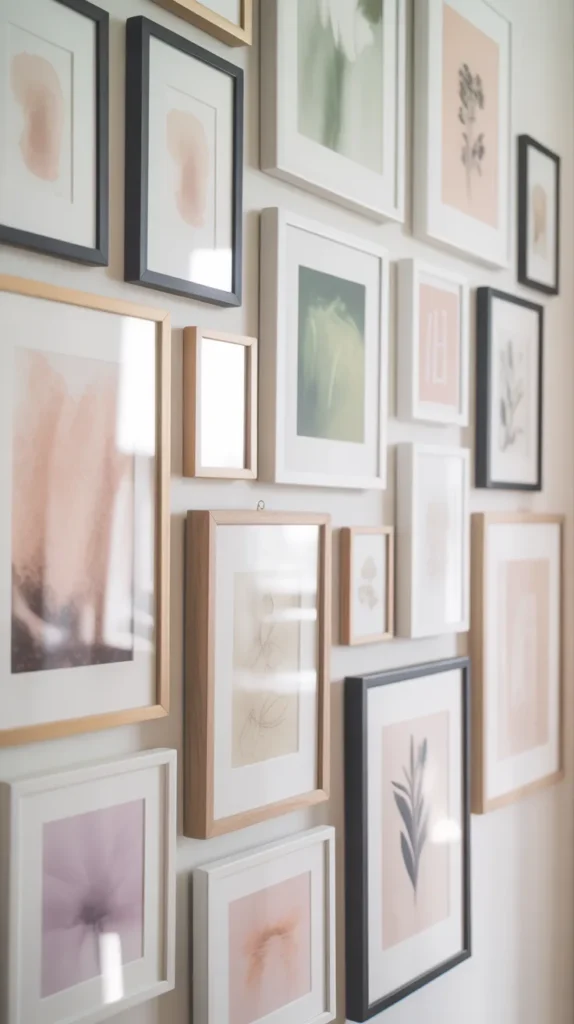
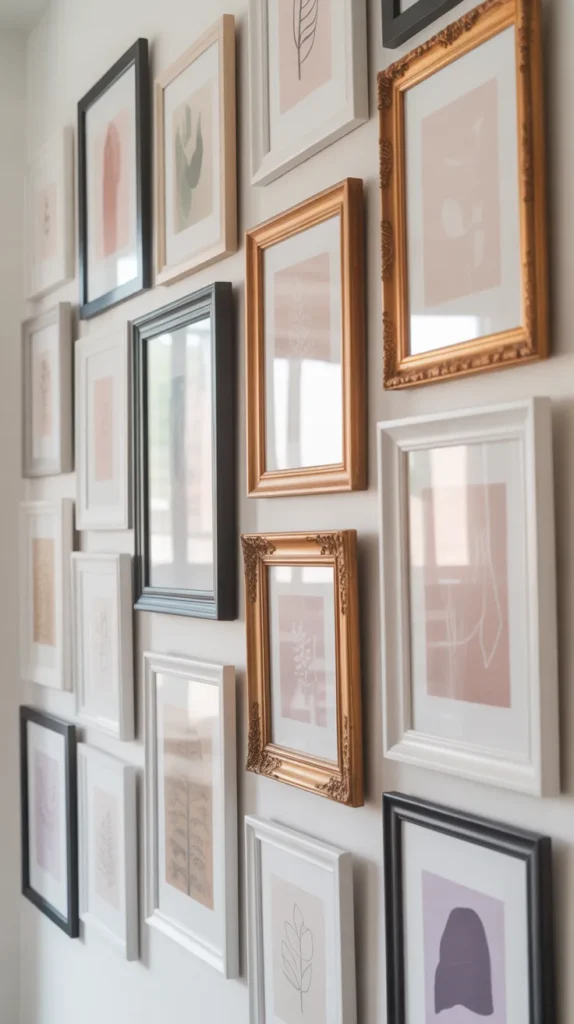
11. Color-Coordinated Gallery Wall
A color-coordinated gallery wall uses artwork that follows a specific color palette. This creates a harmonious and visually pleasing effect without requiring identical frames or styles. The color theme ties everything together.
This approach works well in modern interiors and allows for creative freedom while maintaining cohesion. Choose colors that complement your room’s decor for a seamless look.
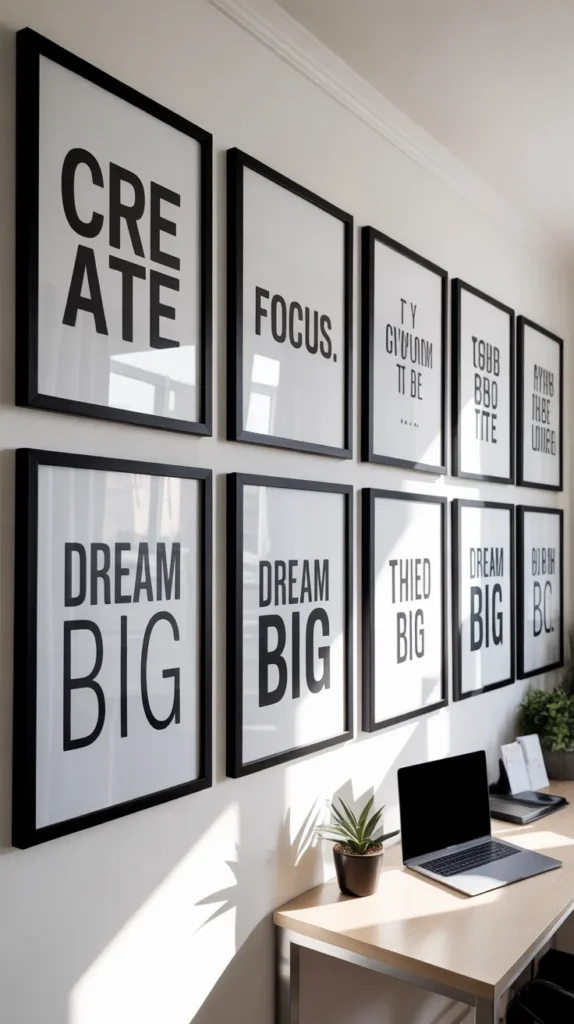
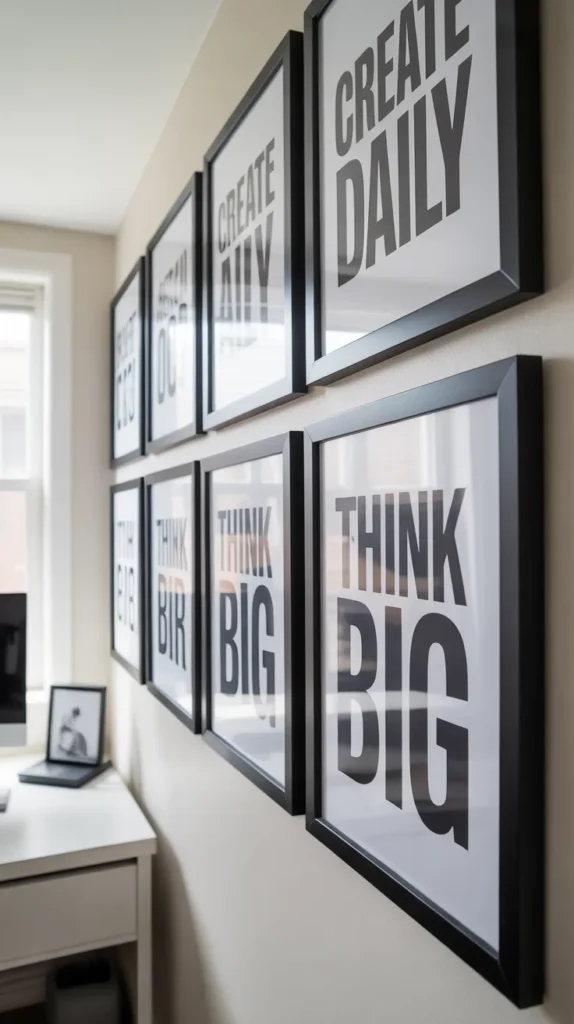
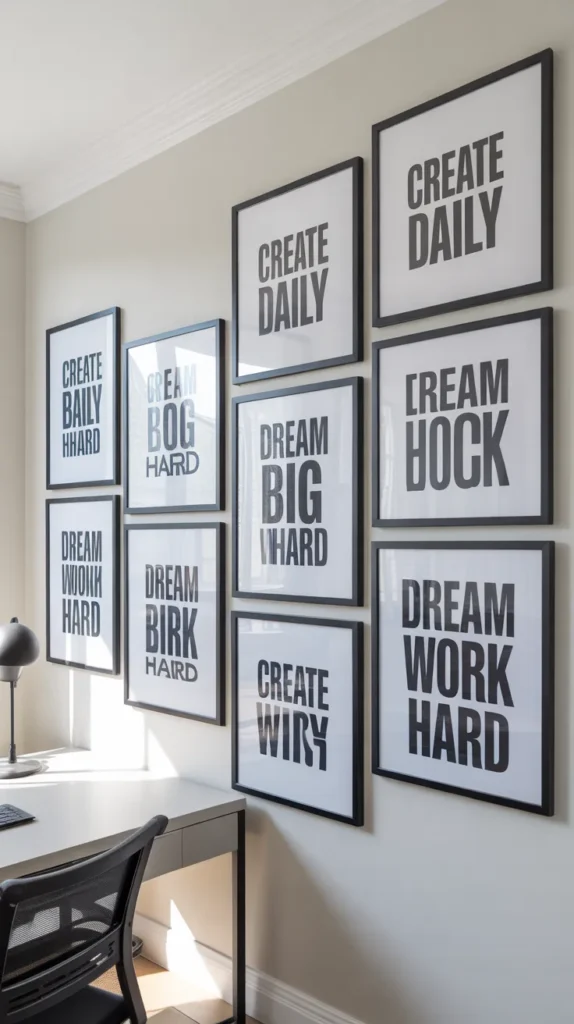
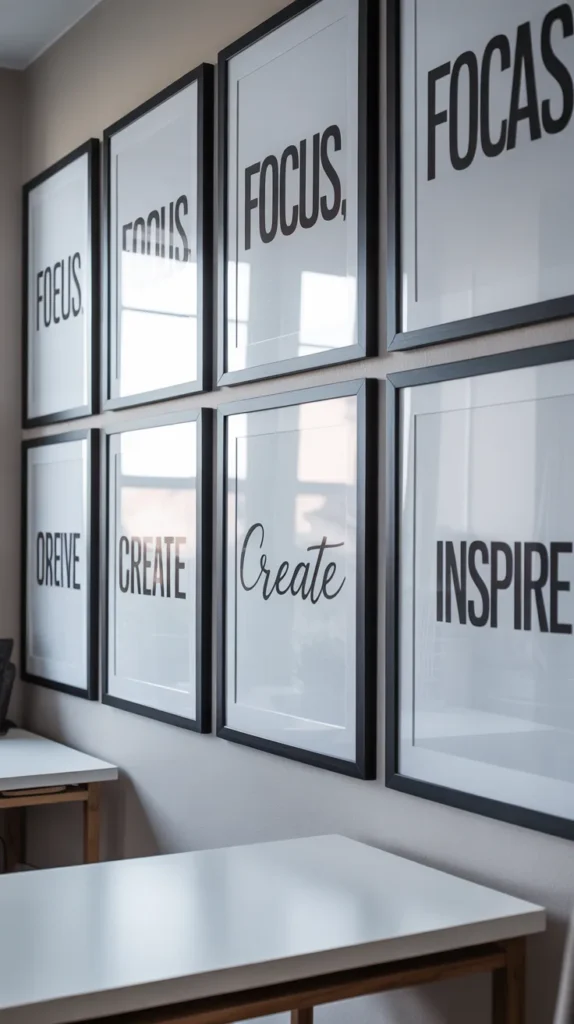
12. Typography and Quote Gallery Wall
A typography-focused gallery wall emphasizes words, phrases, and quotes. It’s ideal for expressing values, motivation, or humor. Mixing fonts and sizes keeps the display dynamic.
This style works well in home offices, hallways, or creative studios. Keeping the color palette limited ensures readability and visual balance.
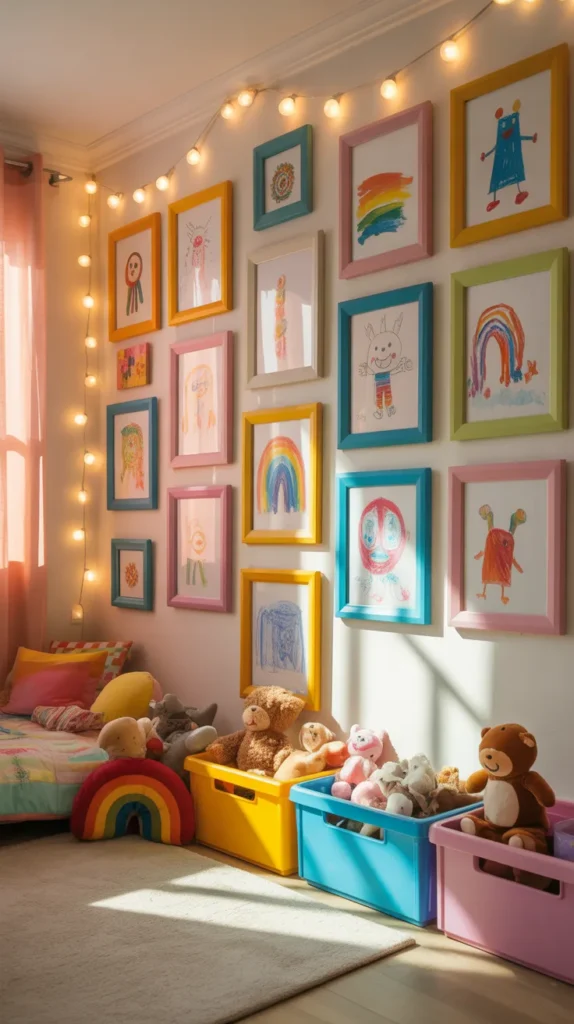
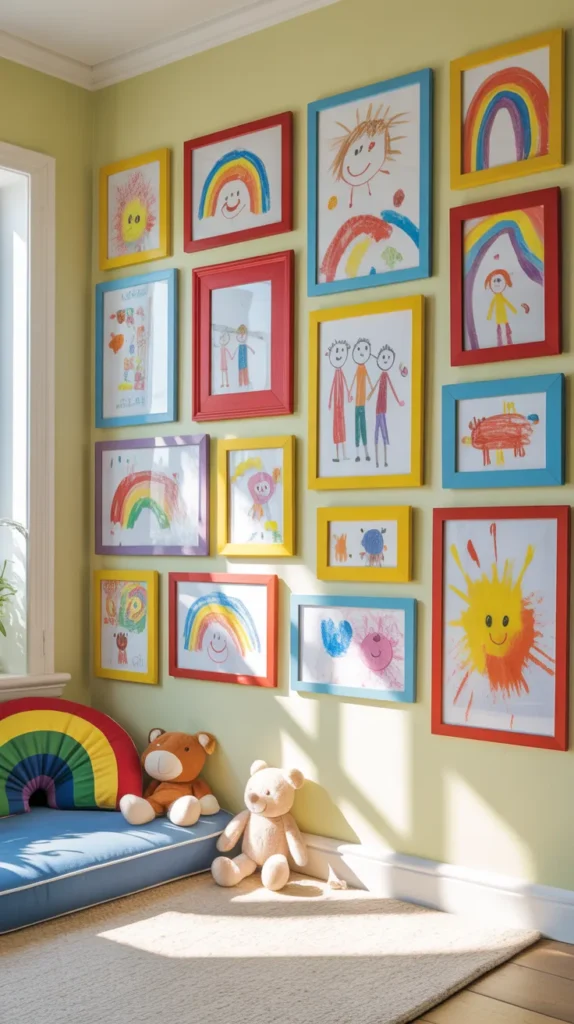
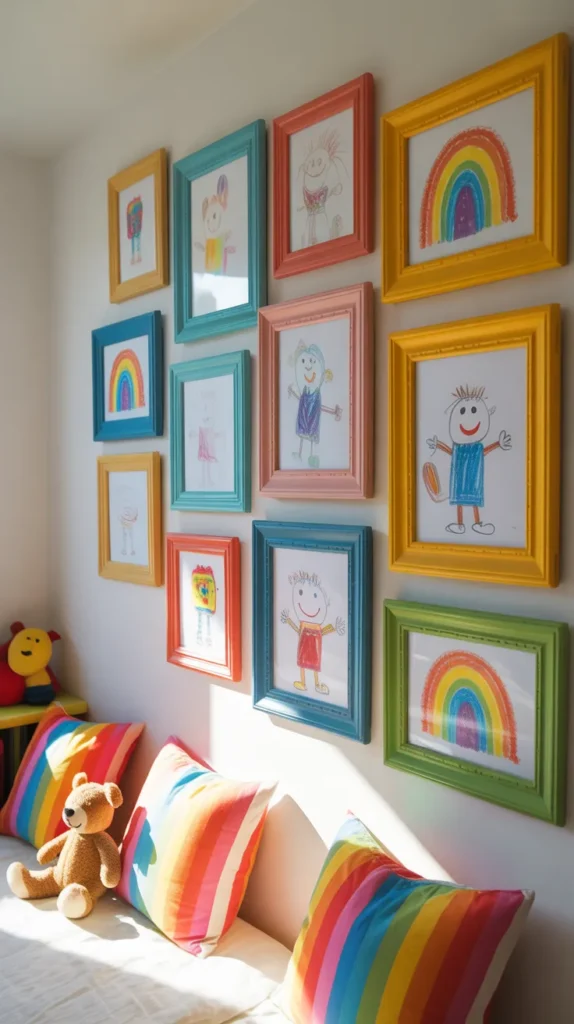
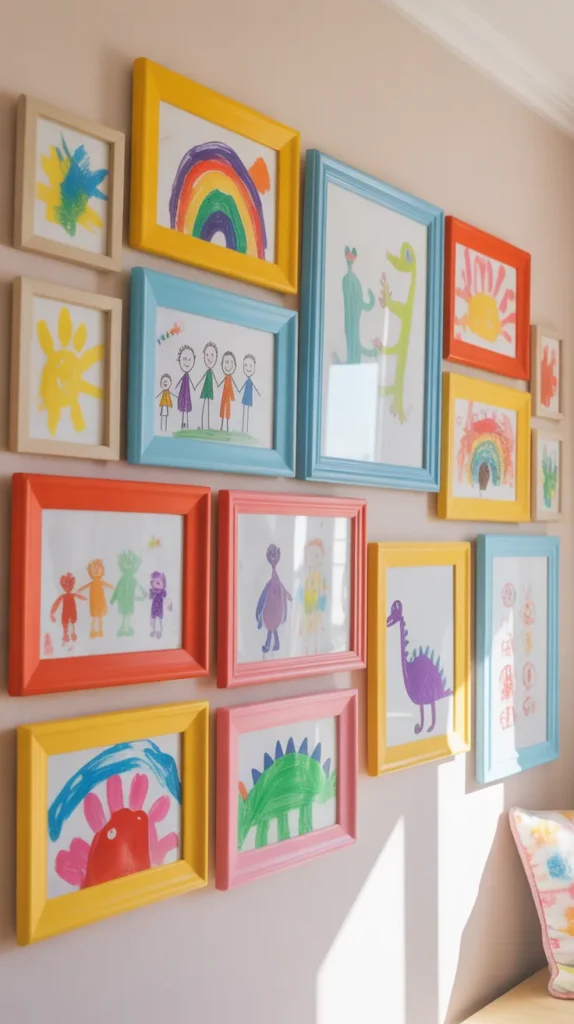
13. Kids’ Artwork Gallery Wall
Displaying children’s artwork as a gallery wall celebrates creativity and makes kids feel proud of their work. Use simple frames or clip systems for easy updates as new art is created.
This idea works beautifully in playrooms, bedrooms, or family spaces. It adds color, joy, and personality to the home.
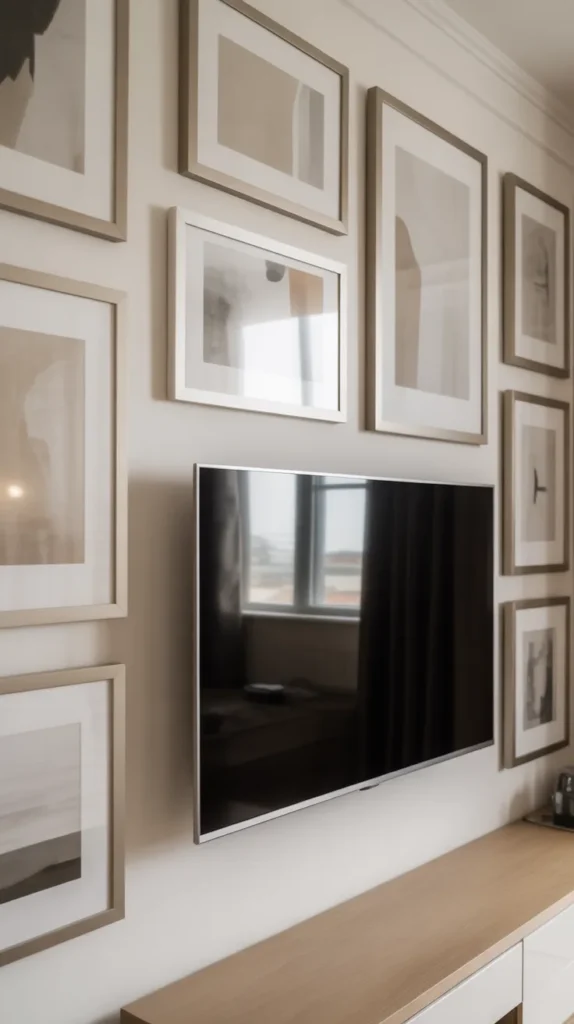
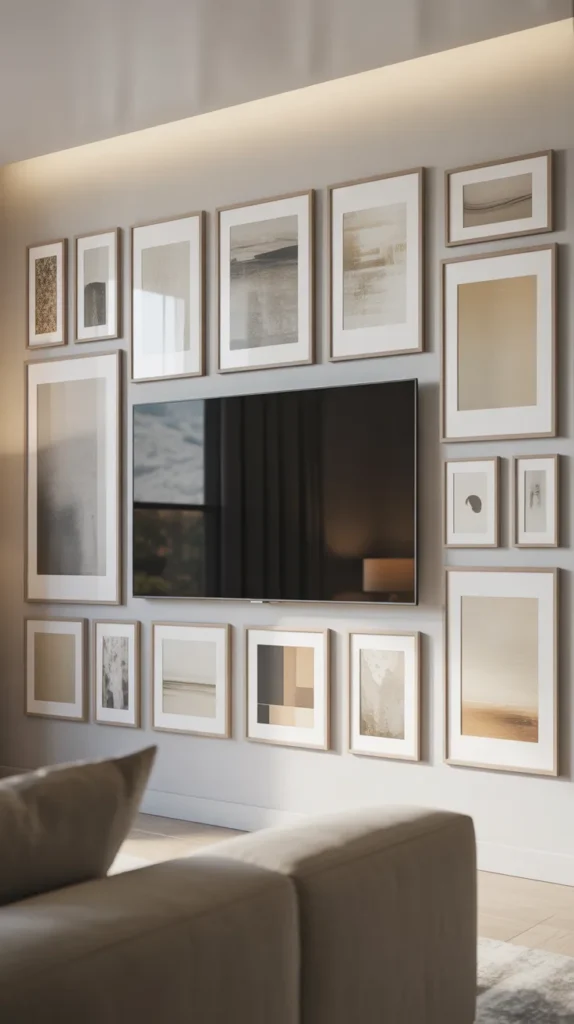
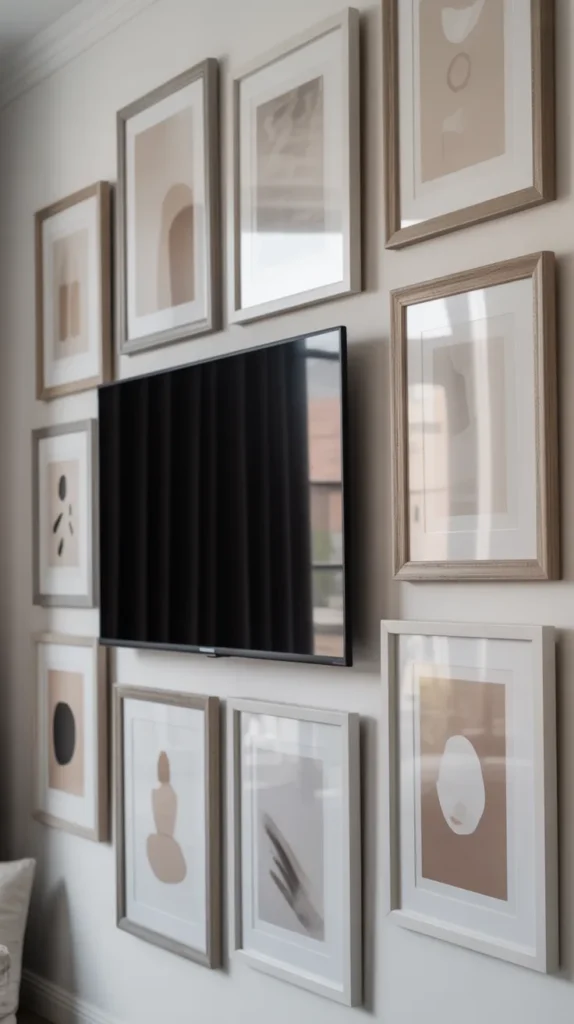
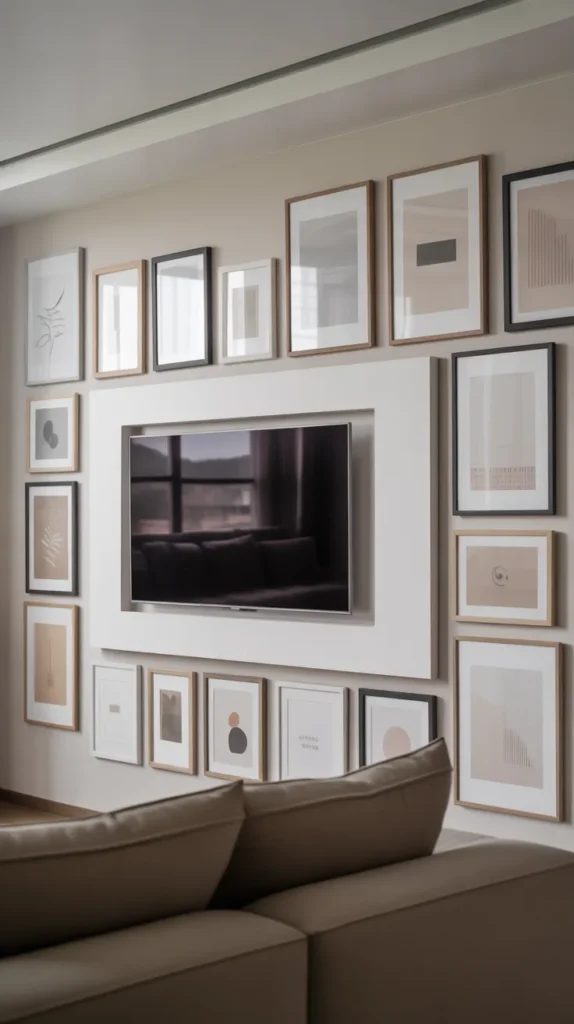
14. Gallery Wall Around a TV
Designing a gallery wall around a TV helps integrate technology seamlessly into your decor. Surrounding the screen with frames reduces its visual dominance and creates a balanced focal point.
This approach works best with neutral or subtle artwork that doesn’t distract while watching TV. It’s an excellent solution for modern living rooms.
Final Thoughts
Gallery walls are incredibly versatile, allowing you to express creativity while enhancing your home’s design. Whether you prefer structured layouts or free-form arrangements, the key is to plan thoughtfully and choose pieces that resonate with you. With these 14 gallery wall ideas, you can confidently design a wall that feels both personal and visually stunning.